Acrosaleniidae
Gregory, 1900, p.306
Genre type : Acrosalenia Agassiz, 1840, p.39
Description succinte de la famille : Apex hémicyclique (ds certains genre, les oculaires I et V sont insertes), tubercules perforés et crénelés. Présence de suranales. Chez Acrosalenia, périprocte en position excentrée arrière sur l'axe antéro-postérieur, Ambulacres trigéminés.



|
Diagnose originale du genre par Agassiz |
||||
|
Description des échinodermes fossiles de la Suisse, 1840, p.38 |
||||
|
||||
|
|
||||
|
Description de l'espèce par Agassiz |
||||
|
Description des échinodermes fossiles de la Suisse, 1840, p.39 |
||||
|
||||
|
||||
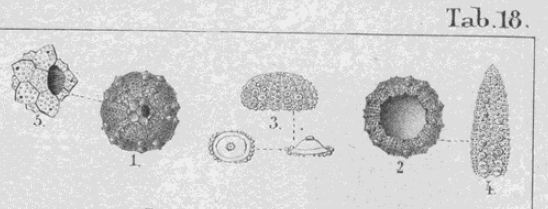
| Bathonien inférieur 16 mm |
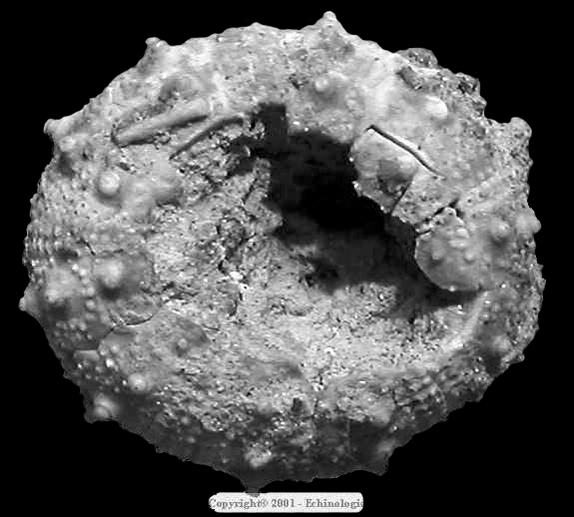 |
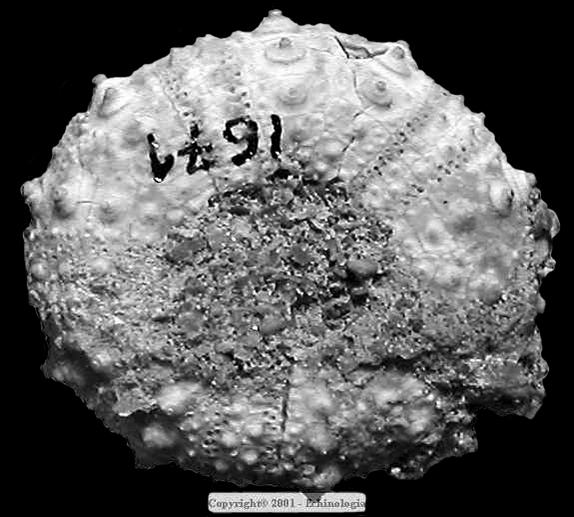 |
||
| Bajocien supérieur 9 mm |
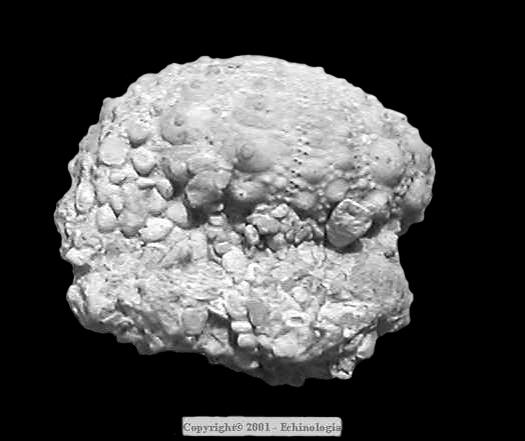 |
|||
| Bathonien inférieur 12 mm |
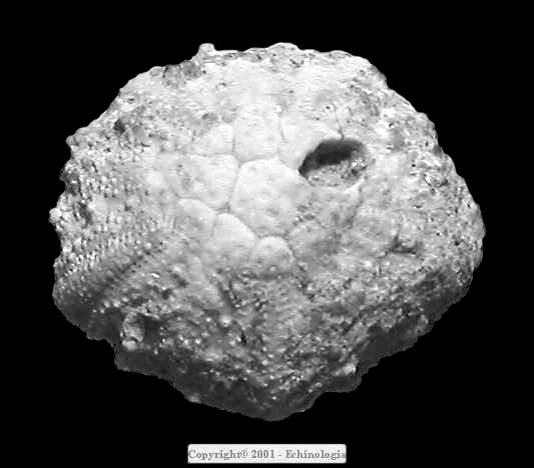 |

Diagnose originale de l'espèce par Desor, 1858
Synopsis des échindes fossiles, p.142
|
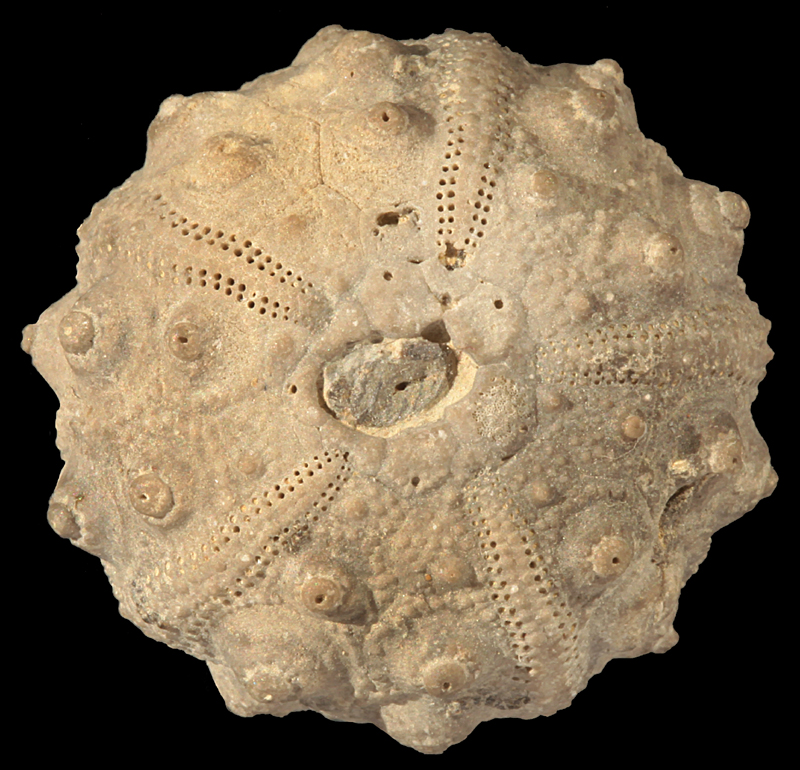
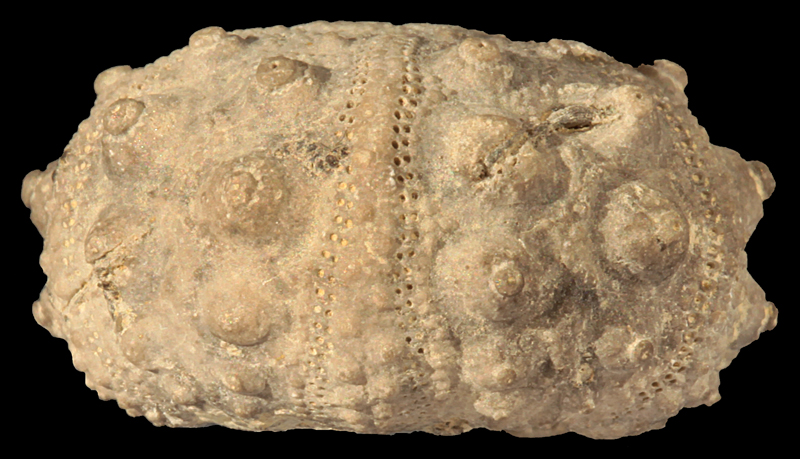
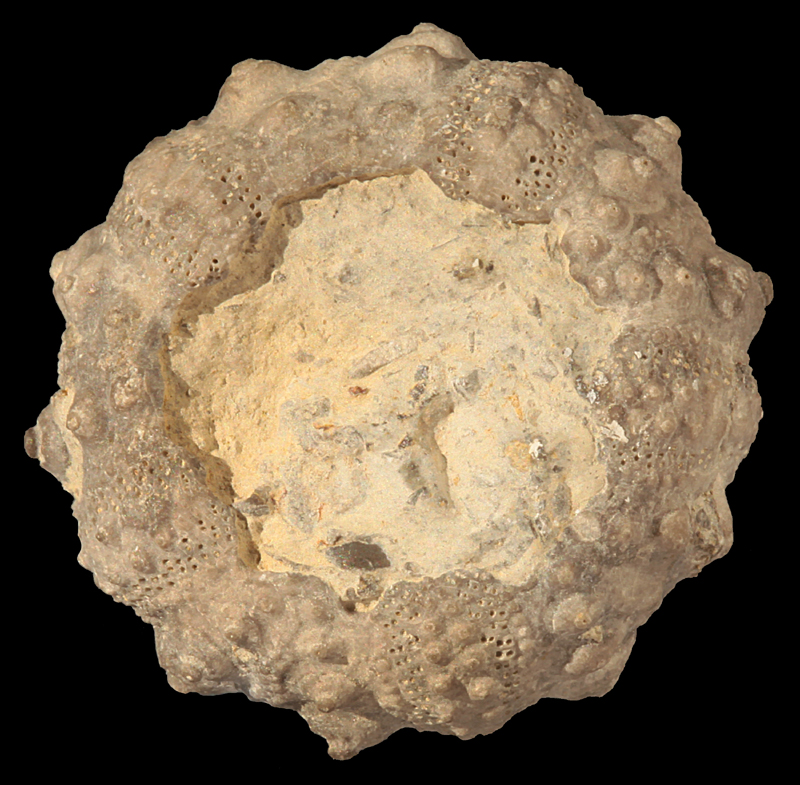
Bouchardi nov. sp. Grande espèce très voisine, au premier abord, de l'A. Lamarckii, mais à tubercules ambulacraires plus gros et à zone miliaire proportionnellement moins large et moins revêtue. Grande Oolite (Bathonien) de Marquise. Coll. Michelin, Mus. Neufchâtel. Nota. Comme la précédente, cette espèce est rapportée au genre Acrosalenia à cause de sa ressemblance avec l'A. Larmarckii. Le disque apical n'est pas connu. Plusieurs personnes l'ont étiquetée à tort du nom de Hemicidaris Luciensis d'Orbigny. |
| Acrosalenia bouchardi Desor, 1858, amb, Bathonien, Midelt, Haut-Atlas, Maroc, 19 mm |
 |
 |
 |
Diagnose originale de l'espèce par Wright
On the Cidaridae of the Oolites, 1851, p.154
|
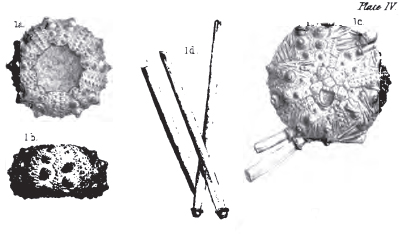
Acrosalenia hemicidaroides, Wright, n.s. Pl. IV. fig. 1 a,b,c,d. Test hemispherical, considerably depressed ; ambulacral areae with two ranges of from fourteen to six teen small perforated tubercles, gradually decreasing in size from the base to the apex ; interambulacral areae with two ranges of primary tubercles, eight in each range. The supra-anal plate is composed of several elements ; the anus is situated before and to the left side ; the surface of the ovarial, ocular, and supra-anal plates is studded with small granulations ; primary spines long, tapering, smooth and slightly compressed ; secondary spines small and needle-shaped ; mouth large and decagonal ; margin reflexed. Height 7/10ths of an inch, transverse diameter 1 inch and 1/10th. One large specimen measures 1 inch and 3/10ths in diameter, but the proportional height cannot be ascertained, as its base is crushed. Description. - Test spheroidal, depressed ; ambulacral areae slightly sinuous, nearly uniform in breadth, tapering towards both poles, and supporting two rows of secondary mammillated perforated tubercles, which are largest at the inferior third of the area, diminishing in size as they approach the mouth and the anus. The tubercles, from fourteen to sixteen in number in each row, are situated alternately on the margins of the area ; a zigzag line of granulations, with lateral branches passing down the centre of the area, separates the tubercles from each other. The poriferous avenues consist of about forty-five pairs of pores set obliquely in a single file. The interambulacral areae are three times the breadth of the ambulacral ; each area is composed of two columns. There ar eight plates in each column, and each plate supports a large smooth mammillated eminence surmounted by a tubercle, which occupies the greater part of the plate ; it is of a conical form, and is encircled by a concave smooth areaola. The summits of the mammae are sculptured on their margins with eleven crenulations, in the centre of which a deeply perforated tubercle rises, with a rather depressed articular surface. In some specimens the areaolae of the mammae are confluent, in others they are separated by a row of small granules. the external and internal margins of the plates are furnished with rows of small granulations, with still smaller granules here and there interspersed ; on the external side of each plate there are nine granulations, which, with those of the adjoining plates, form a sinuous granulated line which defines the internal boundary of the poriferous avenues. The internal row of granulations, with those of the opposite and adjoining plates, form a double granulated zigzag space, occupying the centre of the areae, and forming an elevated ridge which serves to separate the two ranges of primary tubercles from each other. The mouth is large and decagonal, and is one-half the diameter of the test. The margin is deeply notched with ten indentations. The divisions of the circumference are not equal, as the arch over the ambulacral is one-half greater than the arch over the interambulacral areae. The apical disc is greatly developed, occupying more than one-third the diameter of the test ; it is of a pentagonal form, the left anterior angle being more developed than the right. The madreporiform plate is large, and divided into a posterior porous and an anterior non-porous segment. The posterior pair of ovarial plates are likewise large, the anterior pair are small and imperfectly develope ; the left plate is rudimentary, in consequence of the anal opening being eccentric and situated before and towards the left side ; the supra-anal plate is in general of a pentagonal form, and composed of from four to six elements united together and set round the posterior border of the anal opening. The ocular plates are triangular and well-developed ; all the plates of the apical disc are studded with small granules. This species belongs to Agassiz's first division of the Salenians which have the sur-anal plate and the oviductal apparatus situated before the madreporiform plate. The primary spines (fig. 1d) are long, tapering, and slightly compressed, so that a transverse section of one of ther forms an ellipsis in the specimen before me. They are in length about twice the diameter of the test. The body of the spine is smooth througthout ; the base is encircled with a prominent elevated ring of small oblong closely-set granulations ; a smaller circle of larger crenulations surrounding the margin of the concave articulating surface. The secondary spines articulating with the tubercles of the ambulacral areae resemble the primaries in miniature, some of them measuring 3/10ths of an inch in length. The dental apparatus is well-developed. The teeth are strong, triangular, and slightly curved towards the point. Affinities and differences. - Acrosalenia hemicidaroides is distinguished from its congeners by its size, the number and regularity of the primary tubercles, the compound structure of the supra-anal plate, and the granular surface of the apical disc. This Urchin so much resembles a Hemicidaris in the form of the test, the structure of the ambulacra and poriferous avenues, that it was not until we had obtained specimens with the apical disc preserved that we were satisfied of its being an Acrosalenia, of which it certainly forms the finest species. The genera Hemicidaris and Acrosalenia have so many characters in common, which are almost always well-preserved, and so few that are special, and which ar for the most part either broken or absent, that it is difficult to decide upon the genus unless the apical disc is more or less preserved ; it is for this reason we conjecture that so few Acrosaleniae have geen hitherto catalogued from the Oolites, most of the species having been erroneously referred to other genera. The development of from four to six larger mammillated tubercles at the base of the ambulacral areae is a good character for Hemicidaris. In A. hemicidaroides the tubercles in this region are well developed, but are not so well defined as in Hemicidaris. When doubts exist, they can only be solved by the discovery of the apical disc with its supra-anal plate. Locality and stratigraphical range. - I have collected this beautiful Urchin from the upper beds of the Inferior Oolite at Leckhampton, and the Rev. P. B. Brodie found it with its spines attached in the same zone at Selsley Hill. It is found in the planking beds of the Great Oolite at Minchinhampton, and in the Cornbrash near Chippenham. Several fine specimens with the spines attached to the test were obtained from the Forest marble near Malmsbury in Wilts, which are now in the British Museum and the Museum of Economic Geology, and several private cabinets. We have the same species from Kiddington, Oxforshire, in slabs of Great Oolite. From these facts we infer that this large Acrosalenian had not only a considerable stratigraphical range, but likewise that the species was very abundant. Pl. IV. fig. 1 a,b,c,d, d'après Wright
|
Description de l'espèce par Wright
Monograph of the British fossil Echinodermata of the Oolitic Formations, p.234
|
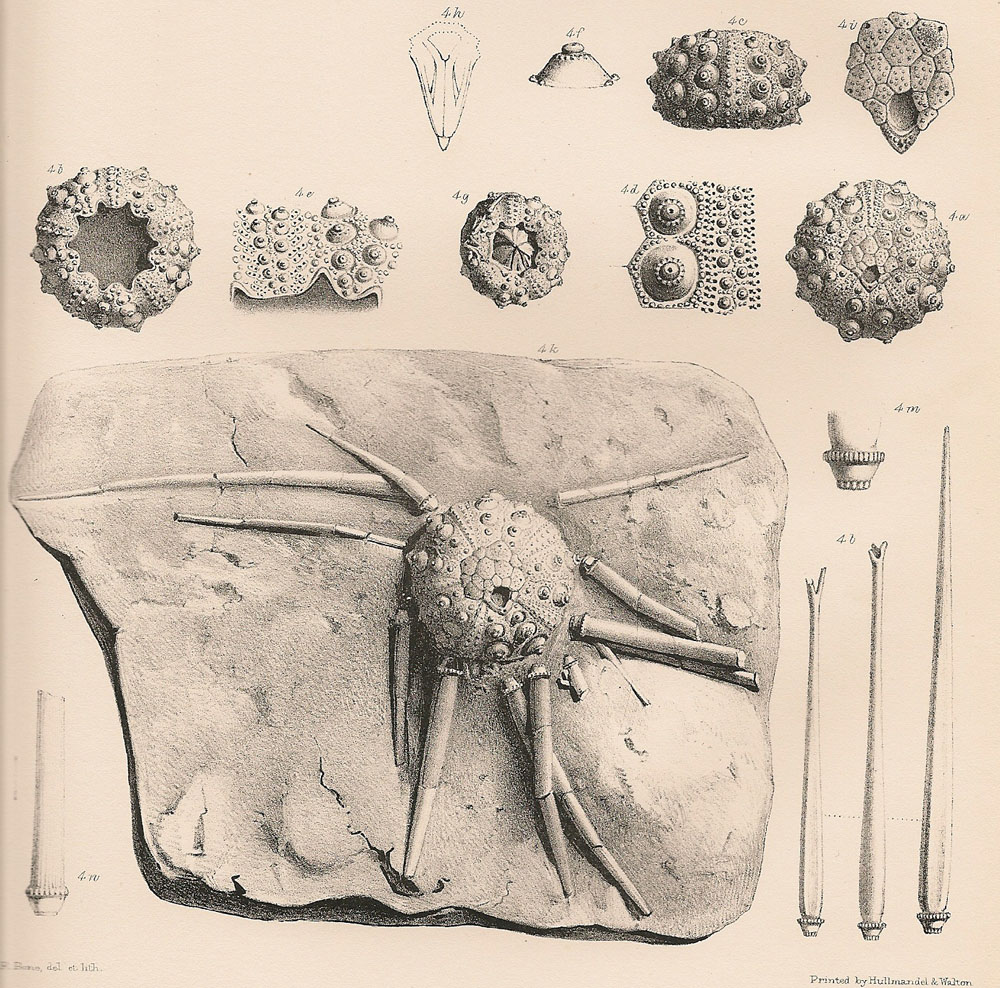
Acrosalenia hemicidaroides, Wright. Pl. XV, fig.4 a, b, c, d, e, f, g, h, l, m.
Test hemispherical, more or less depressed, sometimes elevated ; ambulacral areas narrrow, undulated, with two rows of small, perforated tubercles, fourteen to sixteen in each row, which alternate on the borders of the area, and gradually diminish in size from the base to the apex ; inter-ambulacral areas with large prominent tubercles on the sides, and small tubercles near the disc ; arealas sub-confluent ; miliary zone narrow, with two rows of granules ; apical disc very large ; sur-anal plate composed of six elements ; mouth large, decagonal ; peristome deeply notched ; primary spines twice or more in lenght the diameter of the test ; stem sub-angular, tapering, or slightly compressed ; extremity sometimes bifid or trifid. Dimensions. - This species varies so much in size and figure, that I have selected four specimens on account of their differences, the comparative dimensions of which are shown in the following table :
Description. - This is the most common and best preserved of all our fossil sea-urchins ; it has long been known as a Cornbash species, but was neither named, figured, nor described, until I gave its history, with figures and details, in my "Memoir on the Cidaridae of the Oolites ;" since then it has been figured and described by Professor Forbes in the fourth Decade of the "Memoirs of the Geological Survey;" nd by M. Desor, in tabl. XX, figs. 19-23, of his valuable "Synopsis des Echinides Fossiles." This species exhibits much variation in size and figure, but its diagnostic characters are preserved with remarkable uniformity throughout these different phases of form and magnitude. The test is sometimes elevated and globular, like a Hemicidaris ; indeed, the large forms, the dimensions of which are given in the first column of the table of measurements, are commonly so named ; the absence of semi-tubercles at the base of the ambulacra, and the large size of the elongated discal opening, are the only characters by which they ca be distinguished from that genus. In the more common form (fig. 4 c), the body is spheroidal and depressed on the upper surface ; and, when the flattening is excessive, it produces the depressed form of the third column. The ambulacral areas are narrow and moderately prominent (fig. 4 a) ; they are nearly of a uniform width, gradually expanding in the lower half, and tapering in the upper ; they exhibit a very slight undulating contour, and have two rows of small, nearly equal-sized secondary tubercles, from sixteen to eighteen in each row (fig. 4 c) ; the tubercles at the basal angle are the largest (fig. 4 b, e), and they imperceptibly diminish in size from the circumference to the disc (fig. 4 a), they are all perforated and raised on bosses, which have ten crenulations on their summits (fig. 4 d) ; the tubercles of each row alternate, and in the centre of the area there are one or two rows of granules, which send off small lateral branches to encircle the areolas (fig. 4 d, e). The inter-ambulacral areas are nearly four times as wide as the ambulacral ; they consist of two columns, each composed of seven or eight plates, each plate bearing a primary tubercle (fig.4d) ; the two plates nearest the peristome are very small (fig. 4b), the four on the sides are very large (fig.4c), and the two near the disc are small(fig.4a) ; the tubercles are elevated on very large bosses (fig.4f), which have ten or more deep crenulations on their summits, the tubercles themselves are perforated ; around the base of the boss there is a wide, smooth areola ; the plates are bordered by a single row of granules (fig.4d), which, however, is sometimes absent from the upper and lower borders, the areolas then being confluent ; the miliary zone is narrow, and is formed of two rows of granules, with the intermediate angles having a few smaller additional granules introduced ; the areolas are separated from the poriferous zones by a row of granules on the zonal side of the plates (fig.4d). The poriferous zones are narrow, the pores unigeminal throughout, except at the base, where they fall into triple oblique rows ; the septa form small elevations on the surface, and a beaded line thereby passes down the zone between the pores forming a pair (fig.4d), and there are nine or ten pairs of pores opposite each tubercular plate. The apical disc is often admirably preserved in this beautiful urchin ; the study of its curious structure first enabled me to correct M. Agassiz's erroneous supposition, that the genital plate, which carries the madreporiform body, is the single plate, and represents the posterior side of the animal, instead of the right antero-lateral plate which occupies the same relative position in all the Echinoidea. The disc is one third the width of the test, and in cosequence of the projection of the genital plates has a pentagonal form ; it is slightly convex and prominent, the anterior and posterior pair of genital plates are nearly of the same size (fig.4 a, i), the right anterior is the largest, and carriest on its front part the madreporiform body ; the small crescentic-shaped single plate forms the posterior boundary of the vent (fig. 4i) ; the oviductal holes are all near the apices ; the sur-anal plate is composed of xis or seven pieces arranged like mosaic before the anal opening ; the ocular plates are small and firmly wedged between the genital and sur-anal elements. All the plates of the apical disc have numerous granules scattered on their surface. The mouth opening is wide, nearly one half the diameter of the text ; the peristome is decagonal ; the ambulacral being larger than the inter-ambulacral lobes, the ten deep notches, with reflected edges, indent the bases of the inter-ambulacra, and extend as far as the areolas of the second or third tubercles. The primary spines are finely preserved in situ in fig. 4 k ; they are variable in size in the same and in different specimens, and are proportionally shorter in young than in old urchins ; sometimes they are three times the length of the diameter of the body (fig.4 b), and are sometimes nearly three inches and a half in length ; the head is conical, with a truncated extremity marked by deep creulations (fig.4 m), the ring is prominent, and the milling is angular and sharp ; the stem (fig. 4b) swells out beyond the ring, it is more or less irregularly sub-angular, with the angles rounded ; a transverse section of one of the spines exhibits an irregularly elliptical figure ; sometimes the spine tapers to a conical point, or the distal end terminates in a bifid or trifid extremity. The secondary spines articulating with the ambulacral tubercles (fig. 4 n) are short, about three tenths of an inch in length, they are round, and taper gently from the ring to the point, their surface being covered with fine longitudinal lines (fig. 4n). The jaws are preserved in one or two specimens (fig. 4 g) ; the lantern is strong (fig.4 h), the teeth conical, and in its general appearance the dental apparatus closely resembles that of an Echinus. Affinities and differences. - This urchin very much resembles a Hemicidaris ; in fact, Acrosalenia and Hemicidaris have so many characters in common, which are always well preserved, and so few that are diagnostic, and which for the most part are either broken or absent, that it requires considerable practice, when the apical disc is wanting, to determine the genus ; the absence of semi-tubercles at the base of the ambulacrea and the magnitude and pentagonal form of the discal opening serve as good guides to the genus. Acrosalenia hemicidaroides is distinguished from A. Lycettii by having a larger and more spheroidal test, larges bosses on the sides, and smaller ambulacral tubercles ; the apical disc is larger, and the sur-anal plate is composed of a greater number of pieces. Acrosalenia hemicidaroides is distinguished from A. pustulata in having regular rows of secondary tubercles in the ambulacral areas, which are larger and more fully developed ; the miliary zone is narrower, with only two row of granules ; the primary tubercles are more developed at the upper surface, and the apical disc is likewise larger. The same characters distinguish it from A. Wiltonii ; but besides those already enumerated, that species has four rows of fine granules in the miliary zone, smaller tubercles, suddenly diminishing at the upper surface, and a much smaller mouth opening. The complex character of the sur-anal plate, the size of the test and of its primary tubercles, readily separate it from A. spinosa. Locality and Stratigraphical position. - The finest specimens of this urchin with their spines attached (fig. 4 k) have been collected by Mr. William Buy, from the Forest Marble, near Malmesbury, in a thin vein of clay, which, according to that acute and careful collector, separates the Cornbrash from the Forest Marble. The beauty of these specimens, and the admirable state of preservation in which they are found, forms one of the marvels of the Oolitic fauna ; a great quantity of fine tests are collected from the gray brashy beds of the Cornbrash near Chippenham. Mr. Bristow obtained it from the Cornbrash near Wincanton ; Mr. Pratt from the Forest Marble at Hinton Abbey ; Mr. Hull found very large specimens in a cream-coloured, calcareous, semi-indurated, marly bed of the Great Oolite near Burford, in a quarry not far from the Bird-in-hand Inn. I discovered two specimens in the Great Oolite limestone of Minchinhampton Common. The specimens said to have been found in the Inferior Oolite have been ascertained to be A. Lycetti. The Rev. A. W. Griesbach collected quinquefid spines of this urchin in the Great Oolite at Wollaston, Northamptonshire, along with Acrosalenia pustulata. This species, therefore, belongs to the Bathonian stage, and is a very characteristic urchin of this great zone of life. Pl. XV, fig.4 a, b, c, d, e, f, g, h, l, m, d'après Wright
|
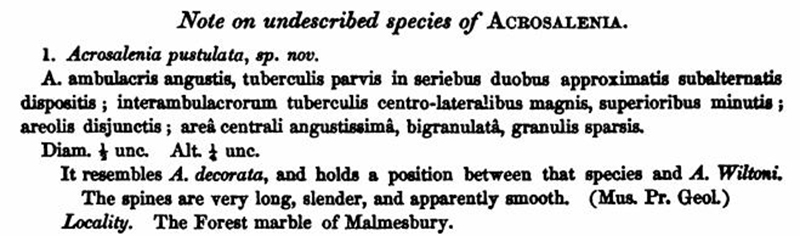
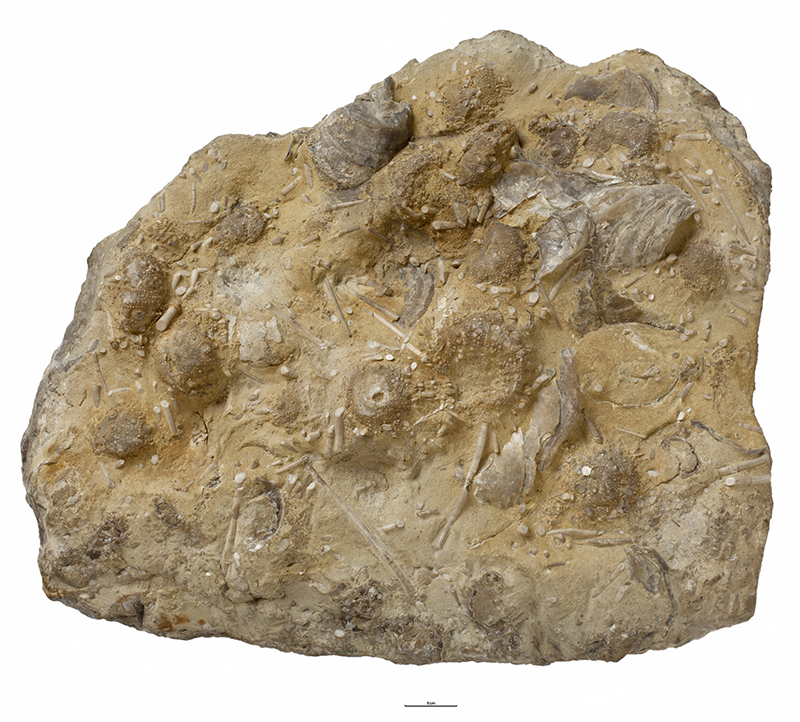
Type de Acrosalenia pustulata Forbes,1850, considéré ici comme synonyme subjectif de Acrosalenia hemicidaroides conservé au British Geologica Survey
Diagnose originale de l'espèce pustulata par Forbes 1852
Figures and description of British Organic Remains, decae IV, p.4
|
|
|
non différencié |
http://www.3d-fossils.ac.uk/fossilType.cfm?typSampleId=571552crédit British Geological Surveyspecimen BGS GSM43891 Forbes 1850 Figures & description of British Organic Remains, dec. IV, p.4 |
|
 |

Acrosalenia hemicidaroides, Wright, 1851 - Bathonien supérieur, Haut Rhin, test 30mm |
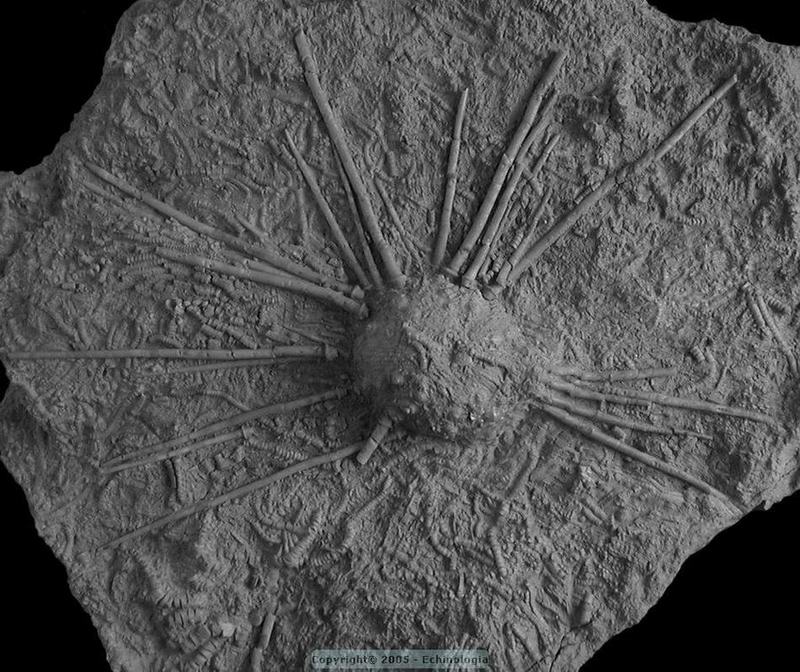 |
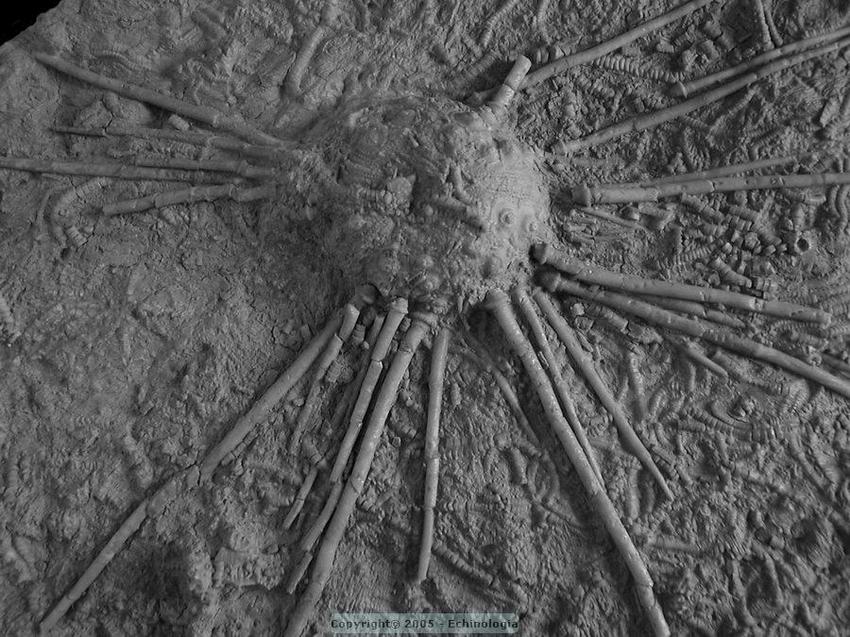 |
Acrosalenia hemicidaroides WRIGHT,1851 var. bradfordensis Rigaux, 1881 - Bathonien supérieur, Suisse, 32 mm |
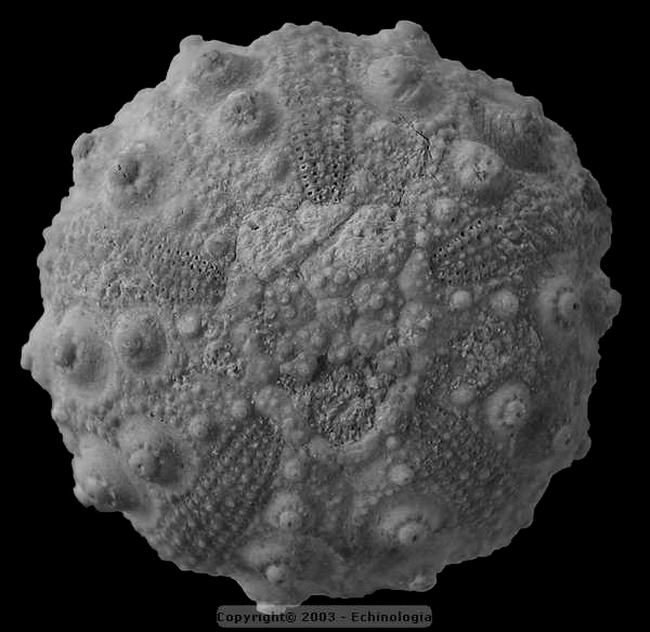 |
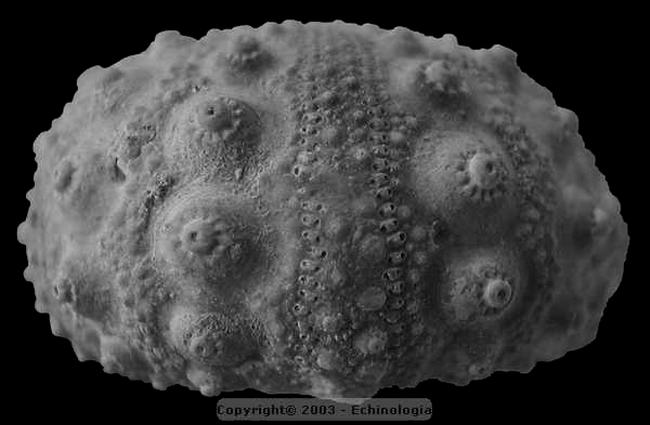 |
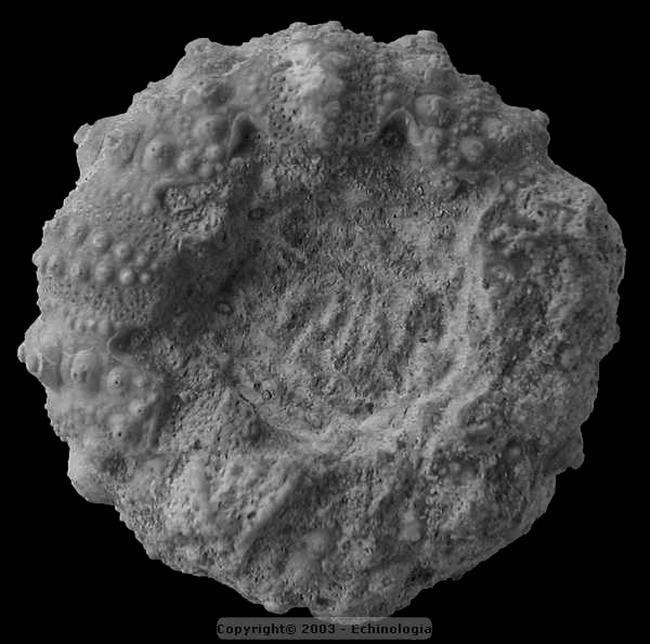 |
diagnose originale de l'espèce par Cotteau
Paléontologie française, terrains jurassiques, échinides réguliers, p.378
|
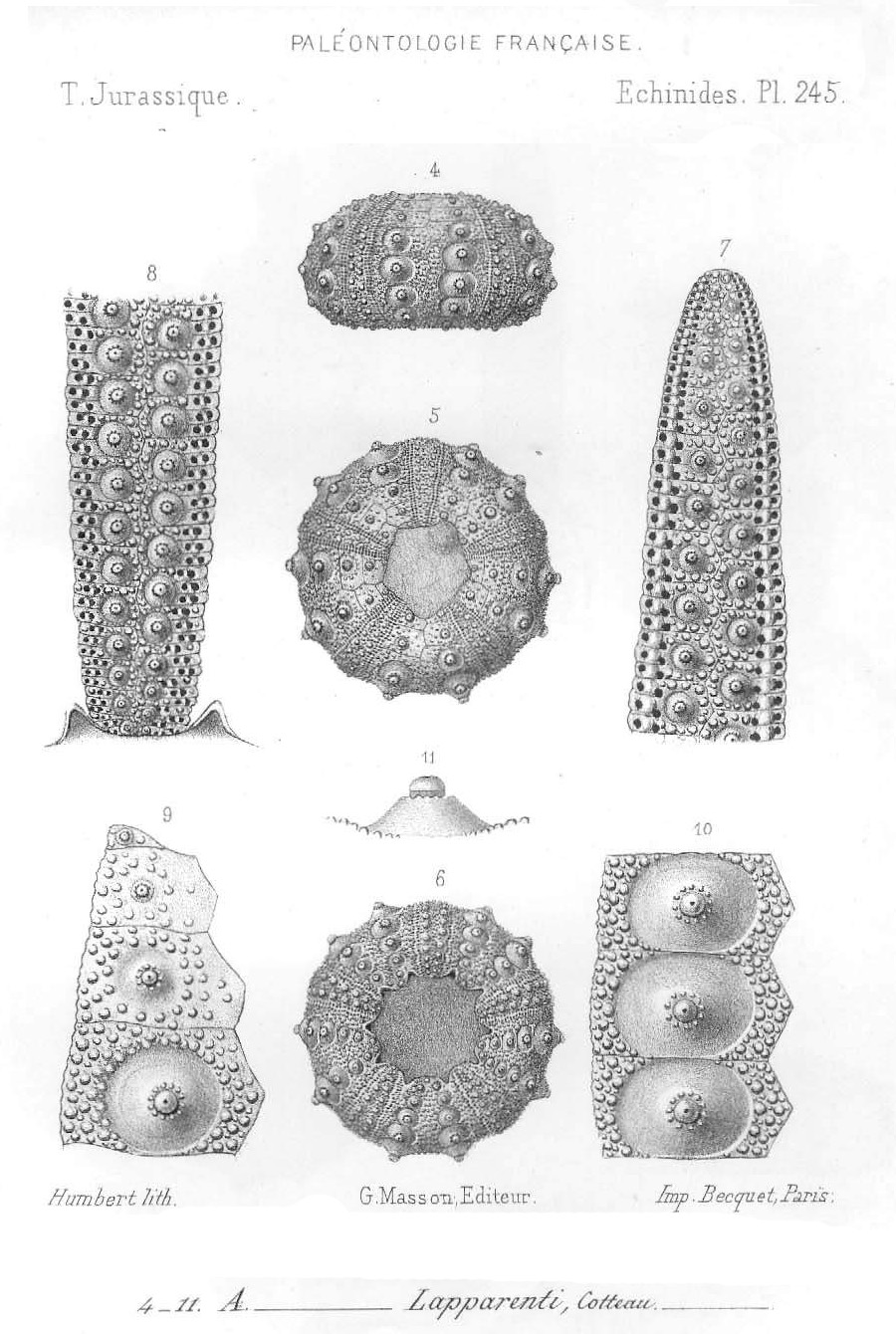
N° 245. - Acrosalenia Lapparenti, Cotteau, 1879 Pl. 245, fig. 4-11. Espèce de trande taille, subcirculaire, médiocrement renflée en dessus, presque plane en dessous. Zones porifères, à fleur du test, formées de pores simples séparés par un etit renflement granuliforme très taillant, se multipliant à peine aux approches du péristome. Aires ambulacraires étroites, légèrement bombées, garnies de deux rangées de petits tubercules crénelés, perforés et très régulièrement espacés, augmentant un peu de volume au fur et à mesure qu'ils s'éloignent du sommet. L'espace qui sépare les deux rangées est assez large et rempli de granules inégaux groupés autour des tubercules en séries d'autant plus régulières qu'on se rapproche de l'ambitus et de la face inférieure. De petites verrues microscopiques se montrent ça et là au milieu des granules. Aires interambulacraires pourvues de deux rangées de tubercules principaux, au nombre de douze à treize par série, fortement crénelés et perforés, très saillants, serrés et elliptiques vers l'ambitus et à la face supérieure, beaucoup plus petits et plus espacés au approches du sommet. Le scrobicule qui entoure les tubercules, très elliptique à l'ambitus, circulaire et presque nul à la face supérieur, est bordé de granules serrés, inégaux, à peu près identiques à ceux qui remplissent l'espace intermédiaire. La bande de test séparant les scrobicules des zones porifères est assez large et garnie comme la zone miliaire, de granules inégaux, irrégulièrement disposés, et auxquels se mêlent de petites verrues microscopiques. La zone miliaire est bien développée, peu sinueuse, presque nue à la face supérieure. Péristome relativement peu étendu, un peu enfoncé, marqué d'entailles profondes et relevées sur les bords. L'appareil apical n'est pas conservé dans l'exemplaire unique que nous avons sous les yeux ; à en juger par l'empreinte qu'il a laissée, il était grand, pentagonal et un peu allongé dans le sens du diamètre antéro-postérieur. Hauteur, 17 millimètres ; diamètre, 31 millimètres. Rapports et différences. - Ce n'est pas sans quelque hésitation que nous avons séparé cette espèce de l'A. hemicidaroides ; elle nous an paru cependant, en l'étudiant avec détail, s'en éloigner par plusieurs caractères qui ne manquent pas d'importance, par sa taille plus forte, par sa forme générale plus circulaire, |
moins élevée, par ses aires ambulacraires présentant deux rangées de petits tubercules séparées par une zone miliaire plus développée et plus granuleuse, par ses tubercules interambulacraires plus petits à la face supérieure, plus nombreux et plus serrés vers l'ambitus, éloignés des zones porifères par une bande de test plus étendue, par sa zone miliaire plus large, moins sinueuse et garnie vers l'ambitus de granules plus serrés et plus abondants. Localité. - Raucourt (Ardennes). Très rare. Etage bathonien, zone à Terebratula cardium. Ecole des mines (M. de Lapparent). Explication des figures. - Pl. 245, fig. 4, A. Lapparenti, vu de côté ; fig. 5, face sup. ; fig. 6, face inf. ; fig. 7, portion de l'aire ambulacraire prise à la face supérieure, grossie ; fig. 8, portion de l'iare ambulacraire prise à la face inférieure, grossie ; fig. 9, plaques interambulacraires de la face supérieure grossies; fig. 10, plaques interambulacraires prises vers l'ambitus grossies ; fig. 11, tubercule interambulacraire grossi, vu de profil.
Planche 245, fig.4-11 d'après Cotteau
|
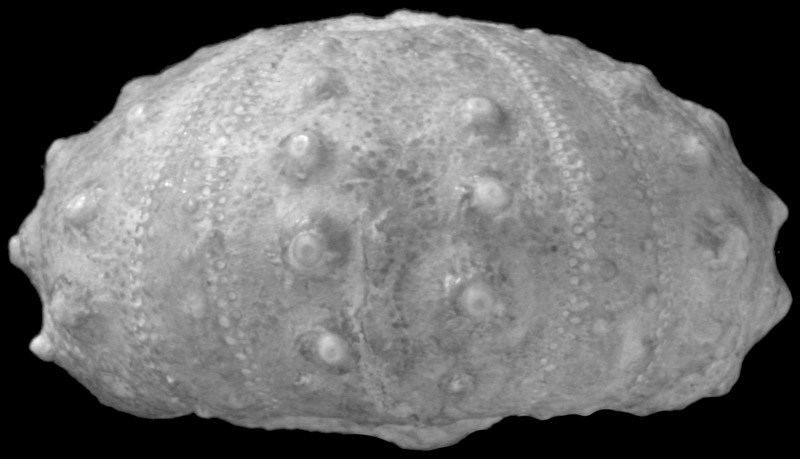
Acrosalenia lapparenti Cotteau, 1879 - Bajocien, Orne, 25 mm |
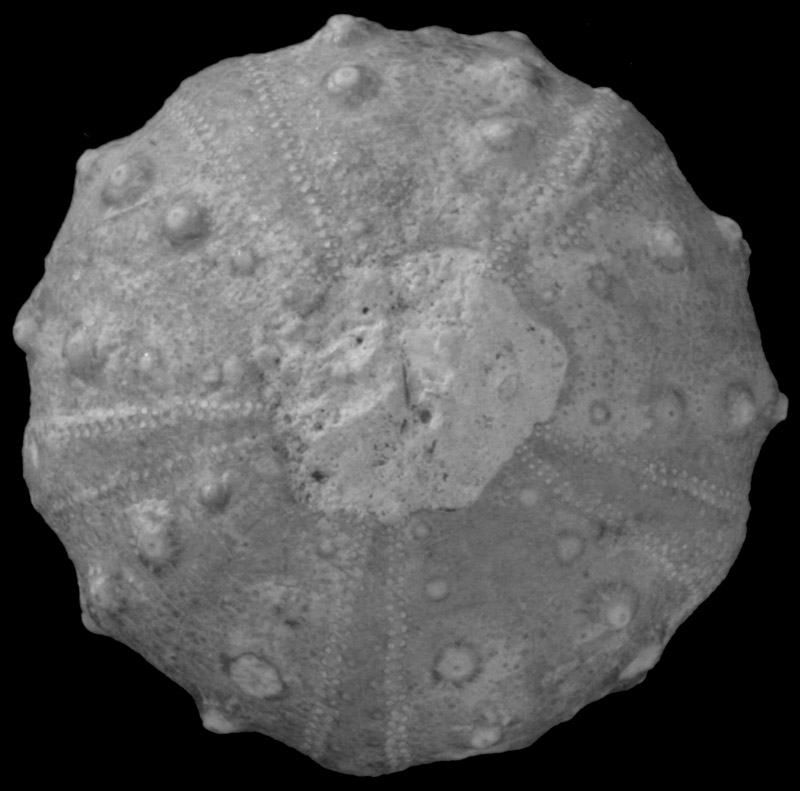 |
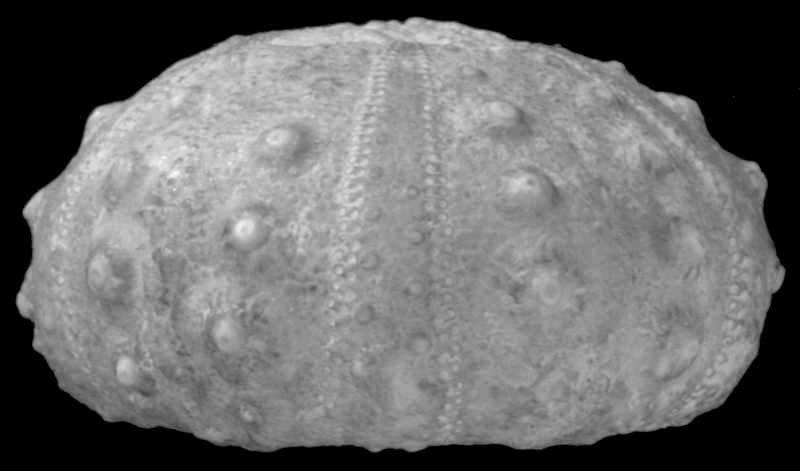 |
 |
 |
Acrosalenia lapparenti Cotteau, 1879 - Bajocien supérieur, Arçonnay, Orne, 15 mm |
%20apical%20Bajocien%20superieur%20Arçonnay%20Orne%2015%20mm.jpg) |
%20amb%20Bajocien%20superieur%20Arçonnay%20Orne%2015%20mm.jpg) |
Diagnose originale de l'espèce par Wright
On the Cidaridae of the Oolites, 1851, p.156
|
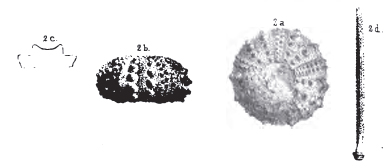
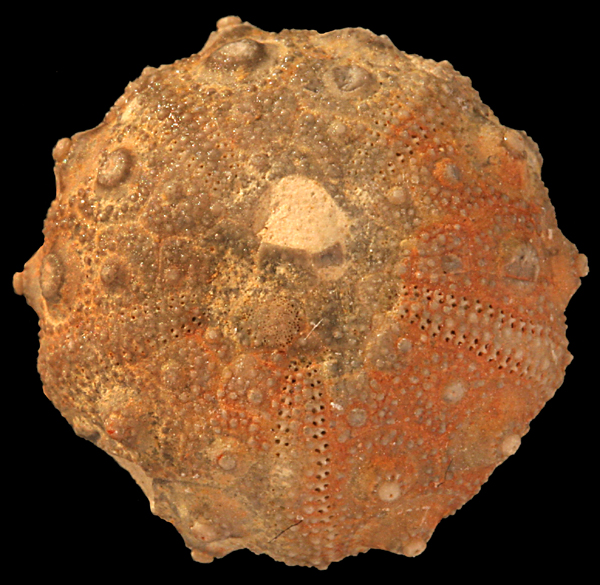
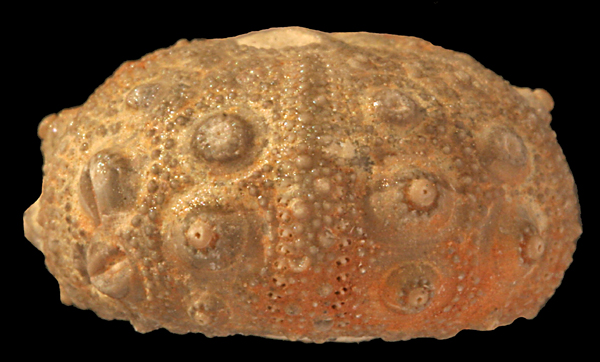
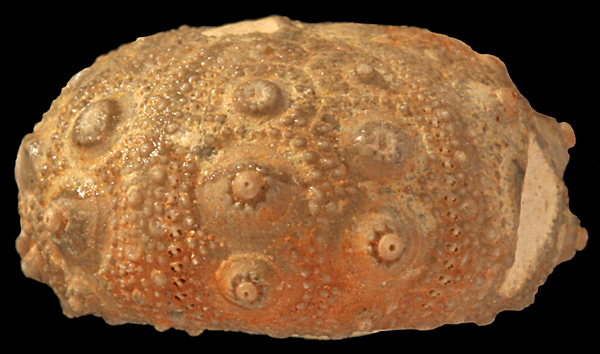
Acrosalenia Lycetti, Wright, n.s. Pl. IV. fig. 2 a,b,c,d. Test hemispherical, depressed ; circumference subpentagonal ; ambulacral areae prominent, having a double series of small tubercles ; interambulacral areae with two ranges of large tubercles ; mammillary eminences of both areae conical and projecting ; tubercles of the interambulacral areae disproportionately small. Height half an inch, transverse diameter 1 inch. Description. - This Urchin resembles A. hemicidaroides in many of its characters, but presents others which justify its separation from that species. The ambulacral areae are straight, prominent, and furnished with a double row of small well-developed tubercles, about twelve in each row ; a zigzag line of small granules descends down the centre of the areae, sending out lateral branches which inclose the areolae of the tubercles for about two-thirds of their circumference, leaving the areolae open to the poriferous avenues. The interambulacral areae are nearly three times the width of the ambulacral, and possess a double range of primary tubercles from seven to eight in each range. The mammillary eminences supporting them are very prominent, and are surrounded by an elliptical areola. The summits of the mammae are scultured with about ten crenulations. The tubercles are disproportionately small when compared with the development of the mammae supporting them ; the two ranges of tubercles are separated by four rows of granulations which form zigzag granular bands descending down the centre of the areae ; similar gands of granulations bound the external borders of the interambulacra, and separate the ranges of the principal tubercles from the poriferous avnues ; the upper and lower borders of the areolae are confluent, but the other parts of their circumberence are surrounded by a wreath of granules. The mammillary eminences and tubercles are largest at the equator, gradually diminishing as they approach the oral and anal poles. The pores are large and disposed obliquely in simple pairs. The mouth-opening is large and decagonal, the marginal notches being of moderate depth. The apical disc is absent in all the specimens we have found ; it is therefore impossible to state whether the anal opening was situate before or behind the single madreporiform plate. Affinities and differences. - This species is distinguished from A. hemicidaroides in having the areaolae more excavated and elliptical. The granules occupying the intertubercular spaces are smaller and more numerous. The tubercles of the interambulacra are disproportionately small when compared with the development of their mammae ; the circumference has in general a subpentagonal outline, from the prominence of the ambulacral areae, the double row of tubercles on which is more fully developed than in A. hemicidaroides. These differences between the tests of our two species although inconsiderable are nevertheless connected with others, which although not seen may be inferred, as the differences in the size and form of the primary and secondary spines belonging to the tubercles of both areae leave no doubt on our mind that A. Lycetti is distinct from A. hemicidaroides, and we know of no other species among its congeners for which it could be mistaken. A granulated spine, and of which we give a figure (2 d), found frequently in the same beds with A. Lycetti, and probably belonging to this species, if proved to be such, would from an important specific character. Locality and stratigraphical range. - We collected this Urchin from the lower ferruginous beds, Pea-grit, of Crickley Hill, and have found it in the same stratum at Leckhampton, Cleeve, and Brockhampton quarries. The specimens are in general much crushed, and the apical disc is always absent. The two specimens which have preserved their form and served for the foregoing description were only obtained within the las few days ; all those previously collected having been too much injured to serve for minute observation. I dedicate this species to my friend John Lycett, Esq., one of the learned authors of a monograph of the Mollusca from the Great Oolite. Pl. IV. fig. 2 a,b,c,d, d'après Wright
|
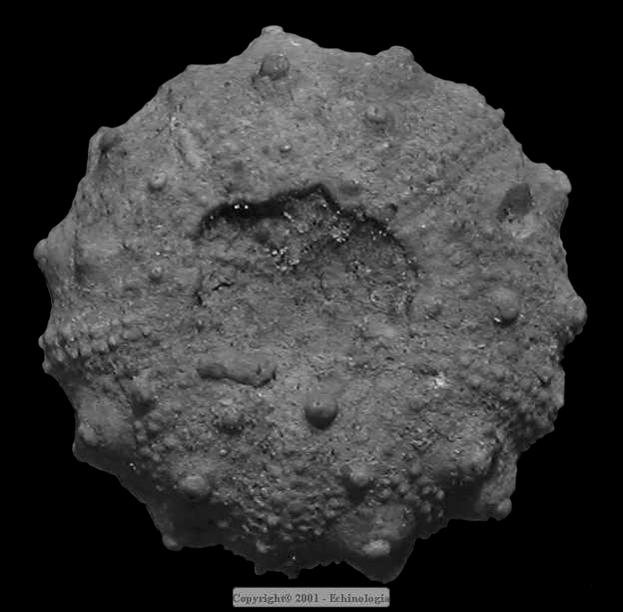
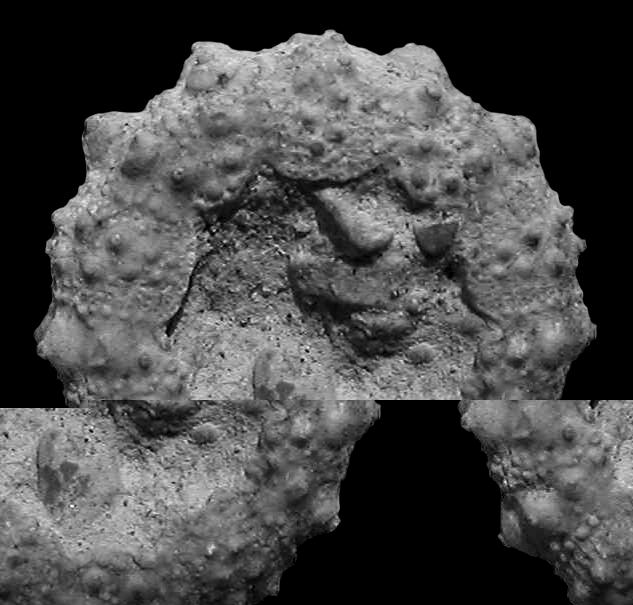
Acrosalenia lycetti WRIGHT,1851 - Bajocien supérieur, Meurthe et Moselle, 20 mm |
 |
 |
 |
 |
 |