Diadematidae
Gray, 1855
Genre type : Diadema Gray, 1825, p.426
Syn : Centrechinidae Jackson, 1912 ; Lissodiadematidae Fell, 1966
Description succinte de la famille : Apex hemicyclique, occulaires postérieures insertes. Les plaques génitales rentrent loin dans l'inter-radius. Tubercules perforés, crénelés (presque toujours). Radioles verticillés.



diagnose du genre par Gray, 1825
An Attempt to divide the Echinida, or Sea Eggs, p.426
|
2. Diadema.
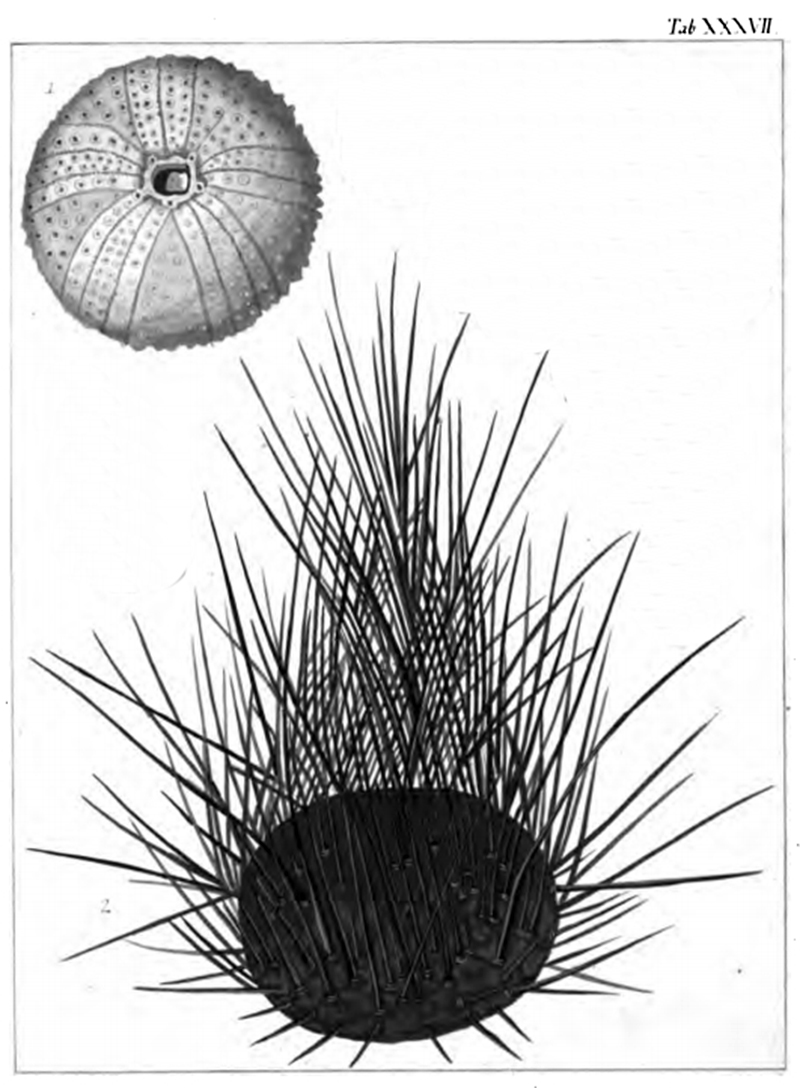
Diadems. Body orbicular, rather depressed ; ambulacra strait, spines often fistulous. *D. setosa, Leske, Klein, t. 37, f. 1, 2. Echinus Diadema, Lin. **D. calamaria. Echinus, Pallas, Spix. Zool. t. 2, f. 4, 8. |
|
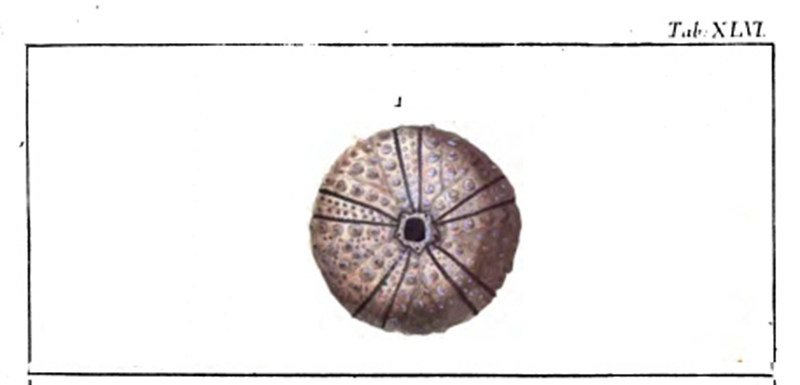
RVMPH. l. c. p. 35. tab. XIII. no. 5. Echinometra fetofa, tefta teneriore et depreffa, verrucis mediae magnitudinis, inter quas minima granula pofita funt : magnitudinem pugni interdum aequat, vndique obfidetus fpinis longis, 4, 6, vel 7 digitorum, aciculae craffitie, quae inftar fetae tenuiffime terminantur : inter has aliae, pilorum inftar, reperiuntur. Spinae hae funt coloris nigro bruni, vel plane nigri, rectae et rigidae, tamen admodum fragiles, exterior fuperficies earum eft crenata, crenis fpiralibus, vt tactu fit afpera. Oua eius efui non funt commoda. _________________________________________________________________________________________________________________________ Var. 2. 2. Tab. XIII. f. 9. Echinometra fetofa, Sinenfis. Defcriptio ibi data valde eft imperfacta. Aculei funt graciles, in apices abtufos definentes (haud dibie fracti fuerunt, vti omnes, quos vidi) colore viridi, purpureo fparfim intermixto. Ocon fimilis eft ei, quae a RVMPHIO tradita eft. Cl. van phelsvm p. 29. N. 39. hanc Sebae iconem de Steekelpen, Echinum aculeis fetofis dicit. planches XXXVII et XLVI (extraits)
|
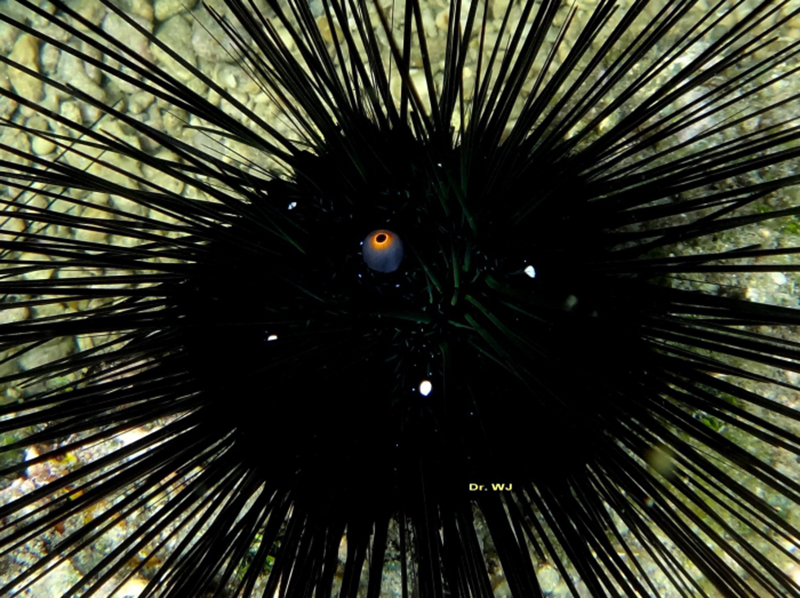
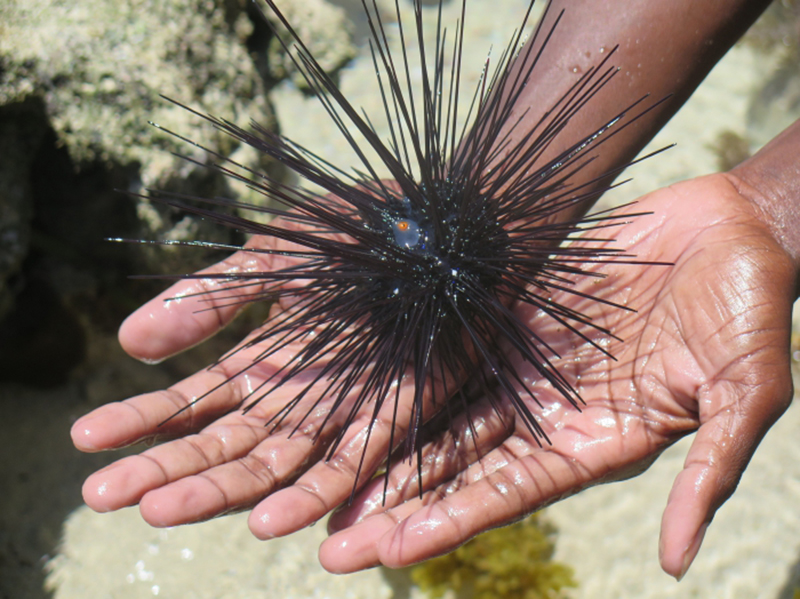
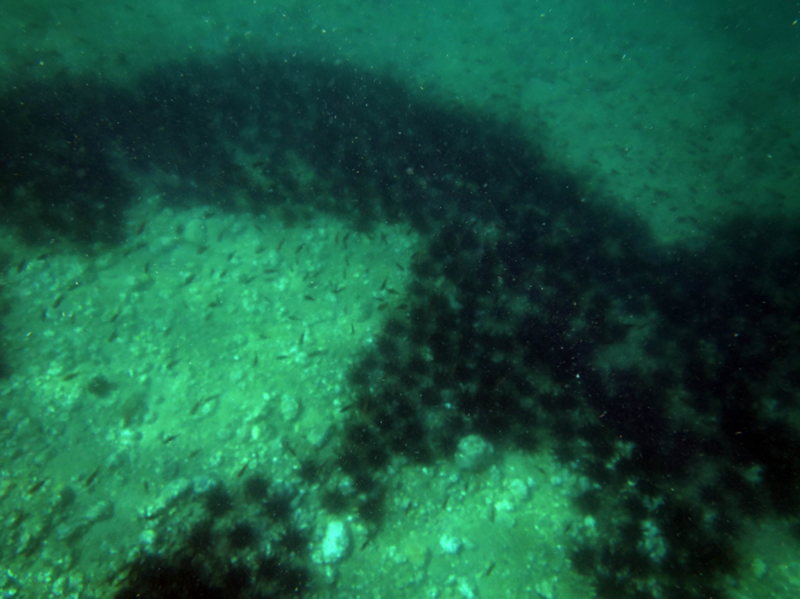
divers spécimens dans leur milieu naturel
| crédit photo : WJ Chen & Lo L C, Pingtung County, Taiwan | crédit photo : Mees Jan, Mombasa beach, Kenya | crédit photo R Mooi, Verde Island Passage, southern Luzon, Philippines, 3m | crédit photo Pillon Roberto, Nafplio, Peloponèse, Grèce | crédit photo Stockinger Martine, Marsa Trombi, mer rouge, plongée de nuit |
 |
 |
 |
 |
 |
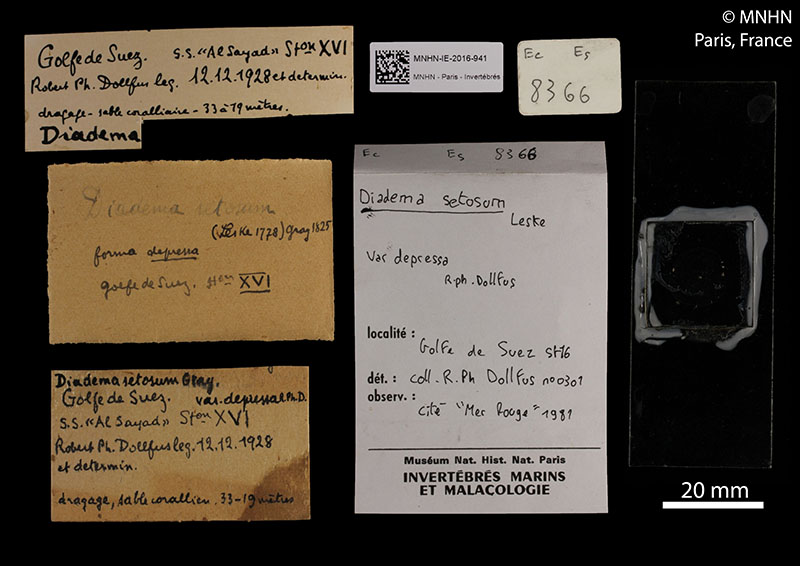
valide comme Diadema setosum (Leske,1778) : nom non disponible infra-subspécifique. Cf. ICZN 4ème éd. ARt. 45.6.3

|
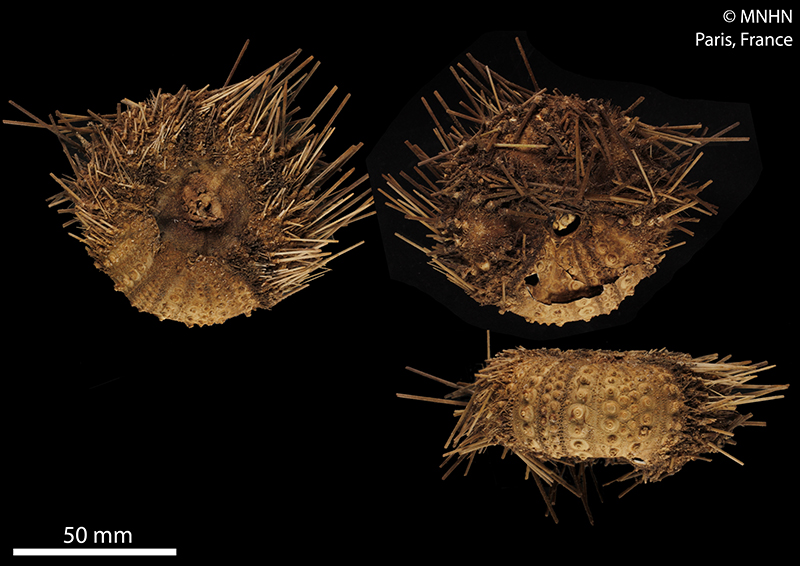
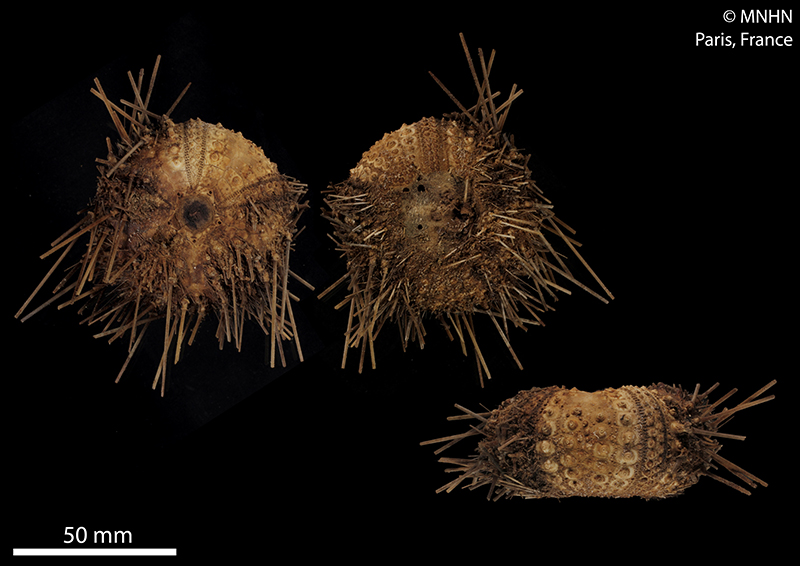
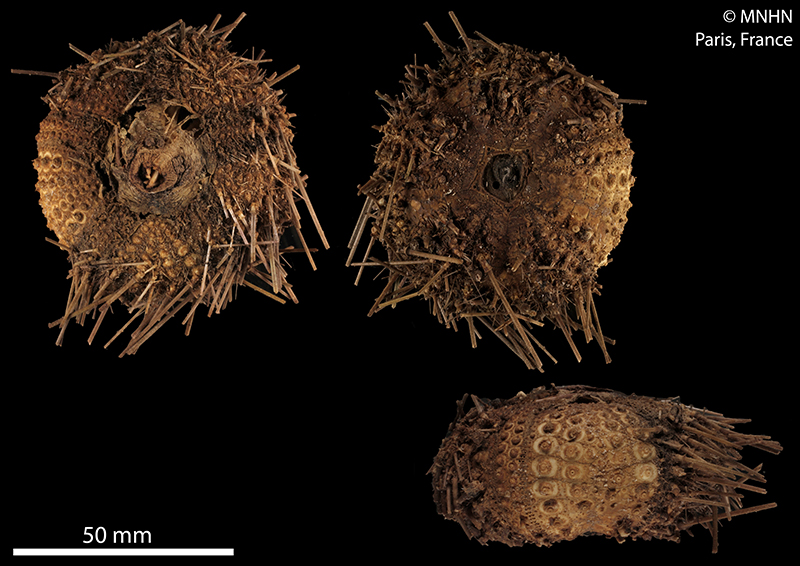
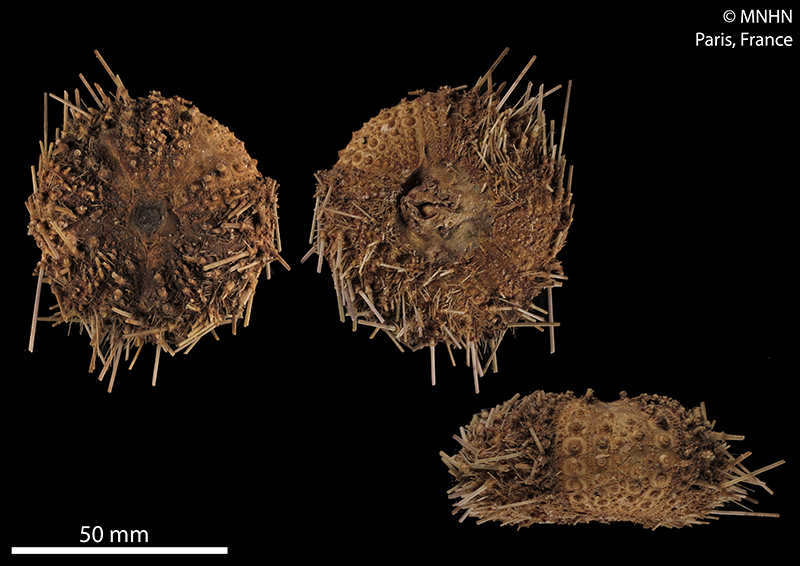
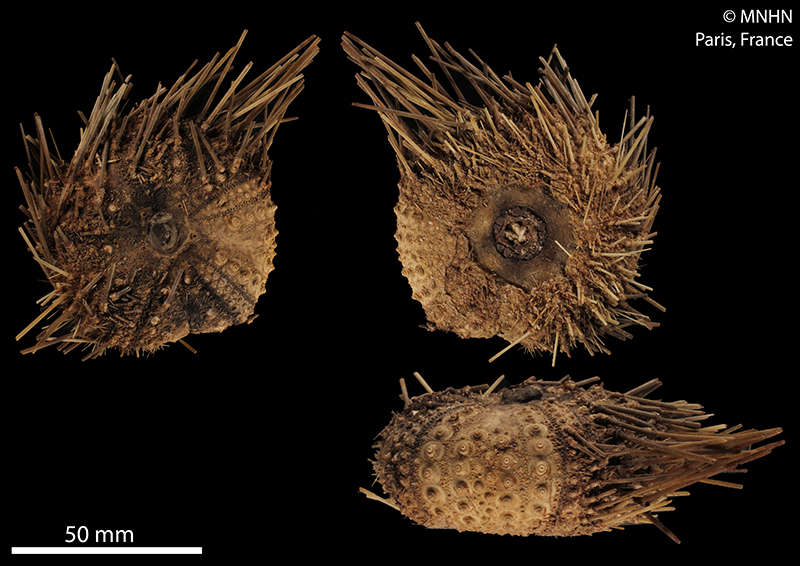
http://coldb.mnhn.fr/catalognumber/mnhn/ie/2016-941 spécimen MNHN-IE-2016-941 crédit RECOLNAT (ANR-11-INBS-0004) Marie HENNION Dollfus & Roman, p. 38 |
|||||
 |
 |
 |
 |
 |
 |
|
Diadema setosum (Leske,1778) - Actuel, Philippines, Cebu, Olango Island, en plongée 20m, pêcheur local, 83 mm |
,%20apical,%20Actuel,%20Olango%20Island,%20Cebu,%20Philippines,%2020m,%2082,7mm.JPG) |
,%20detapical,%20Actuel,%20Olango%20Island,%20Cebu,%20Philippines,%2020m,%2082,7mm.JPG) |
,%20amb,%20Actuel,%20Olango%20Island,%20Cebu,%20Philippines,%2020m,%2082,7mm.JPG) |
,%20interamb,%20Actuel,%20Olango%20Island,%20Cebu,%20Philippines,%2020m,%2082,7mm.JPG) |
,%20oral,%20Actuel,%20Olango%20Island,%20Cebu,%20Philippines,%2020m,%2082,7mm.JPG) |
|
Diadema setosum (Leske,1778) - Actuel, Philippines, Cebu, Mactan Island, en plongée 20m, pêcheur local, 62 mm |
,%20apical,%20Actuel,%20Mactan%20Island,%20Cebu,%20Philippines,%20plongée%2020m,%2062mm.JPG) |
,%20amb,%20Actuel,%20Mactan%20Island,%20Cebu,%20Philippines,%20plongée%2020m,%2062mm.JPG) |
,%20interamb,%20Actuel,%20Mactan%20Island,%20Cebu,%20Philippines,%20plongée%2020m,%2062mm.JPG) |
,%20oral,%20Actuel,%20Mactan%20Island,%20Cebu,%20Philippines,%20plongée%2020m,%2062mm.JPG) |
|
Genre Astropyga Gray, 1825 Espèce type Cidaris radiata Leske, 1778 Extension stratigraphique (bibliographique, non vérifiée) : Actuel Syn.
|
|
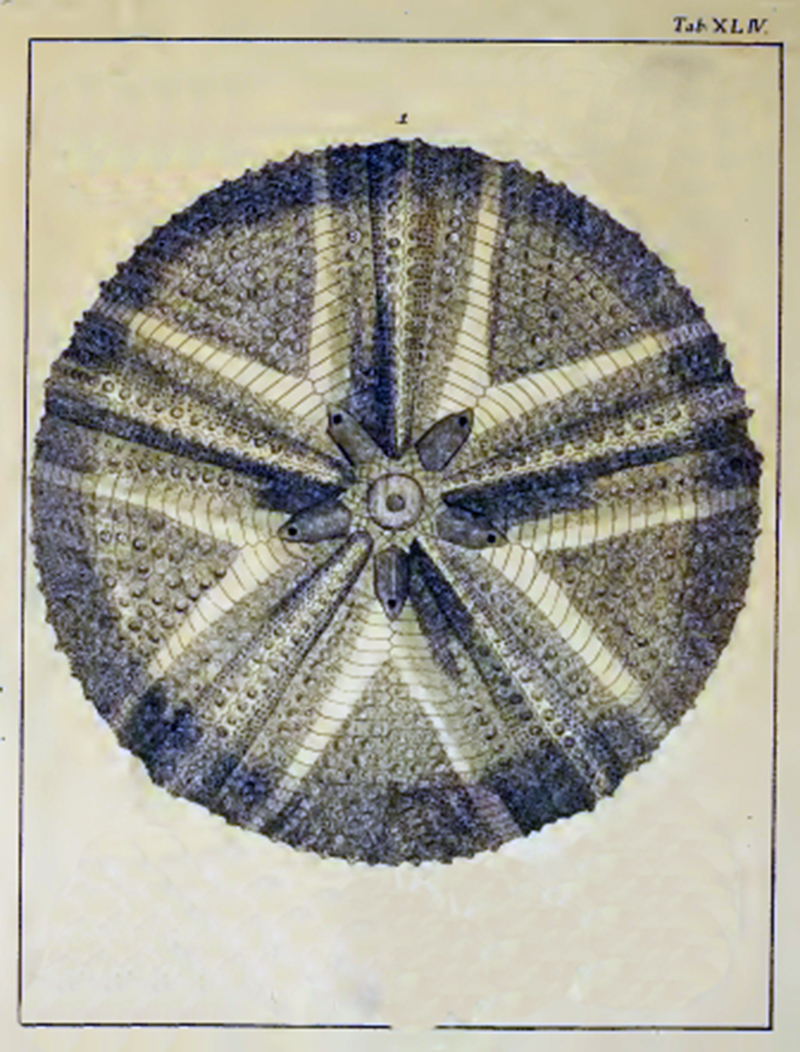
Spec. XV. Cidaris radiata, Tab. XLIV. f. 1. Cidaris radiata. Haec a seba t. XIV. f. 1. 2. delineatur, et p. 31. Echinanthus major, fpinis orbus dicitur. Huius regionem ftella ornat e fornicato et circulari operculo oriunda, quinque protendens radios, quorum fingulorum apices orbiculari foramine pertufi funt. Hi ipfi apice iterum finguli in duos radios albicantes abeunt, nouam ftellam efformantes, quorum interftitia tuberculis paruis et magnis replentur. Omnia haec per fegmenta varia, recta, curua, breuia et longa tanquam intotidem articulos diuifa funt. Plurima quoque in radiis f. ambulacris cernuntur minuta foramina, dilute rubello, quafi malini floris colore, in quibus capillacei aculei (vix hi, fed porius tentaculaà haeferunt. In parte inferiore etiam eft ftellata expanfio, in cuius medio foramina quinque femilunaria. Tubercula hic eodem, quo fuperius, ordine et dilute rubello colore, radii dilute amethyfti purpura fuperbiunt. - Hactenus seba. Quantum ex icone pater, foramina haec femilunaria cutem coriaceam et finus oris interiacent. Recudi curauimus sebae iconem, eamque Tab. XLIV. Fig. 1. fiftimus. planche XLIV (extrait)
|
|
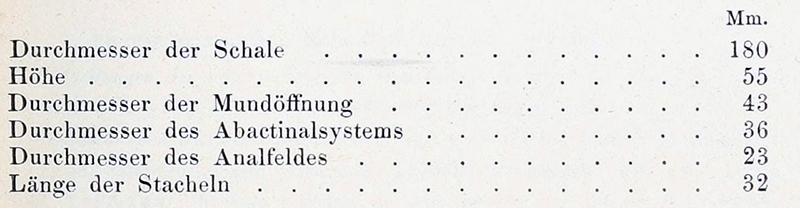
Astropyga elastica n. sp. Testa depressa, epidermide viscosa tecta, flexibilis, elastica, scutis calcareis intervallis membranaceis conspicuis separatis, infra plana, apertura buccali incisa membrana nuda instructa. Corpus supra paullo convexum, area ambulacrali angusta elevata, areae interambulacralis parte nuda depressa. Area abactinalis magna, scutis genitalibus longis lanceolatis, apertura genitali apici approximata, latit. long. 1:2½, membrana anali nuda, scutellis irregularibus spiniferis a scutis genitalibus separata, scutellis ocellaribus latis a scutis genitalibus membrana sejunctis. Color purpureus, spinis purpureis aut albis violaceo-amulatis. Hab. Nov. Britanniam. Dieser Seeigel, der durch die biegsame Beschaffenheit seiner Schale an die Grube'sche Gattung Asthenosoma erinnert, fand sich leider nur in einem Exeplar von 180 Mm. Durchmesser in Great harbour in Neu-Britannien auf 1 faden Tiefe auf Sandgrund. Das Thier war im Leban mit einer dicken schleimigen Epidermis bedeckt, aus der die kurzen Stacheln hervorragten. Der Habitus des Thiers sovie di Vertheilung der Stachelwarzen stimmt mit Astropyga radiata überein, doch unterscheidet sich diese Art, abgesehen von der Grösse, durch die nackte Mundhaut, die Dünne der Platten, deren Ränder |
sich nicht berühren, sondern durch Membranen getrennt
sind, wodurch die ganze Schale biegsam ist, endlich durch die
auffallend kurzen Stacheln. Die Biegsamkeit der Schale ist am grössten
im Abactinalfeld. Die Plättchen, welche die nackte aftermembran
umbegen, sind durch weite häutige Zwischenräume getrennt, ebenso die
Genitalplatten von der Ocellartäfelchen.
|
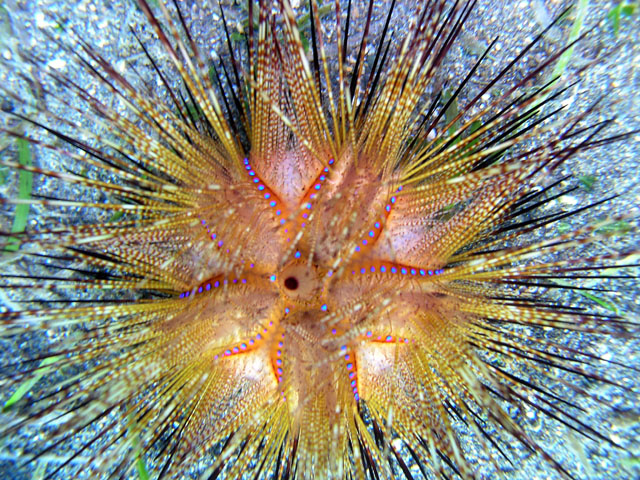
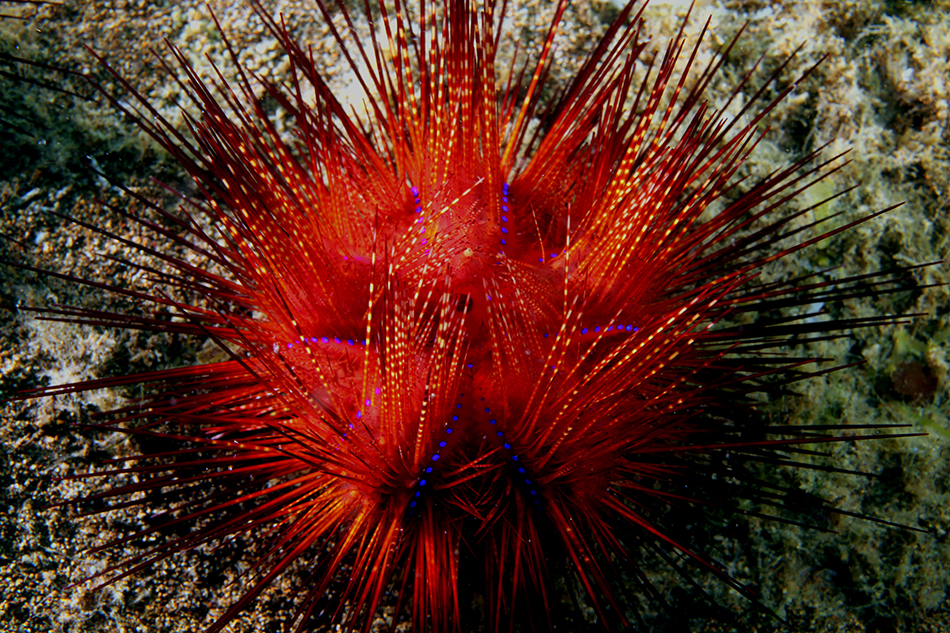
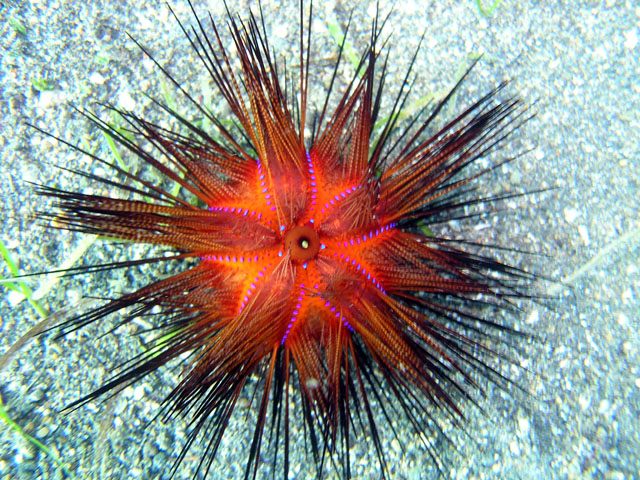
spécimen vivants (crédits au dessus des images
| Crédit Anders Poulsen, Anilao, Batangas, Philippines | Crédit Q. Phia, Philippines | Crédit Anilao, Batangas, Philippines, Anders Poulsen |
 |
 |
 |
|
Astropyga radiata (Leske,1778) - Actuel, Mactan Island, Cebu, Philippines, 75 mm à 20-30 m de profondeur, pêcheur local |
,%20apical,%20Actuel,%20Mactan%20Island,%20Cebu,%20Philippines,%20plongée%2020-30m,%2075mm.JPG) |
,%20amb,%20Actuel,%20Mactan%20Island,%20Cebu,%20Philippines,%20plongée%2020-30m,%2075mm.JPG) |
,%20interamb,%20Actuel,%20Mactan%20Island,%20Cebu,%20Philippines,%20plongée%2020-30m,%2075mm.JPG) |
,%20oral,%20Actuel,%20Mactan%20Island,%20Cebu,%20Philippines,%20plongée%2020-30m,%2075mm.JPG) |
|
Astropyga radiata (Leske,1778) - Actuel, Mantatao Island, Calape, Bohol, Philippines, 143 mm à 12m de profondeur, pêcheur local |
,%20apical,%20Actuel,%20Mantatao%20Island,%20Calape,%20Bohol,%20Philippines,%20143mm.JPG) |
,%20amb,%20Actuel,%20Mantatao%20Island,%20Calape,%20Bohol,%20Philippines,%20143mm.JPG) |
,%20interamb,%20Actuel,%20Mantatao%20Island,%20Calape,%20Bohol,%20Philippines,%20143mm.JPG) |
,%20oral,%20Actuel,%20Mantatao%20Island,%20Calape,%20Bohol,%20Philippines,%20143mm.JPG) |
|
Astropyga radiata (Leske,1778) - Actuel, Olango Island, Cebu, Philippines, 110 mm plongée grande profondeur, pêcheur local |
,%20apical,%20Actuel,%20OlangoIsland,%20Cebu,%20Philippines,%20plongée%20grande%20profondeur,%20110mm.JPG) |
,%20amb,%20Actuel,%20OlangoIsland,%20Cebu,%20Philippines,%20plongée%20grande%20profondeur,%20110mm.JPG) |
,%20interamb,%20Actuel,%20OlangoIsland,%20Cebu,%20Philippines,%20plongée%20grande%20profondeur,%20110mm.JPG) |
,%20oral,%20Actuel,%20OlangoIsland,%20Cebu,%20Philippines,%20plongée%20grande%20profondeur,%20110mm.JPG) |
|
Astropyga radiata (Leske,1778) - Actuel, Panglao Island, Bohol, Philippines, 110 mm plongée 20m, pêcheur local |
,%20apical,%20Actuel,%20Philippines,%20Panglao%20Island,%20Bohol,%20en%20plongée%20à%2020m,%20110mm.JPG) |
,%20amb,%20Actuel,%20Philippines,%20Panglao%20Island,%20Bohol,%20en%20plongée%20à%2020m,%20110mm.JPG) |
,%20interamb,%20Actuel,%20Philippines,%20Panglao%20Island,%20Bohol,%20en%20plongée%20à%2020m,%20110mm.JPG) |
,%20oral,%20Actuel,%20Philippines,%20Panglao%20Island,%20Bohol,%20en%20plongée%20à%2020m,%20110mm.JPG) |
|
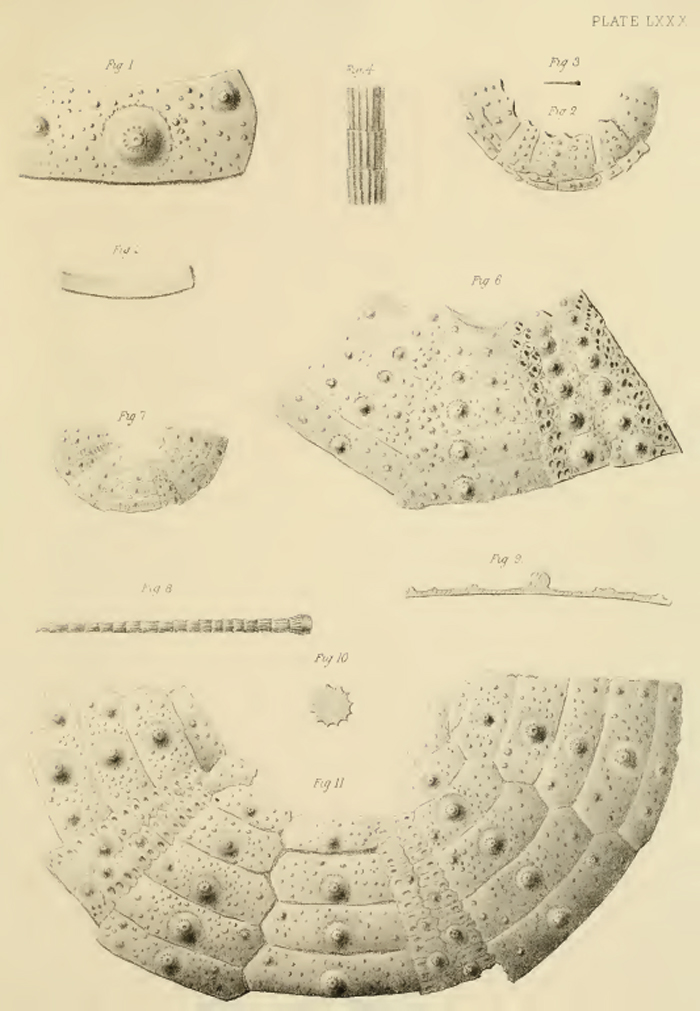
The following description and figures of a new species of Pseudodiadema ha ve been forwarded to me by my valued friend, the Rev. Professor Thos. Wiltshire, F.G.S., as a contribution to my Addenda. Pseudodiadema fragile, Wiltshire. Pl. LXXX, figs. 1-11. "Test somewhat small, thin, circular, depressed, almost flat on upper surface, slightly convex on under. Poriferous zones narrow, straight, pores unigeminal on upper surface, trigeminal on lower. Ambulacra narrow above, rather wider below, with two rows of small perforated tubercles fromoral aperture to above ambitus. Interambulacral wide, two rows of small primary perforated tubercles in the middle extending the whole distance, and two rows of secondary perforated tubercles on lower side, ceasing after passing the ambitus. Miliary zone granular below, showing a few secondary tubercles above and below the ambitus. Mouth-opening large, peristome circular, lobed. Discal opening large, pentagular. Spines small, slender, straight ; surface striated, striae interrumted and diverging, and producing a roughened surface. Dimensions. - Height less than 1/2 inch, transverse diameter 1 1/2 inches. Description. - The test is thin, circular, almost flat on upper surface, slightly rounded on under. In the specimen from which the drawings were made the upper and under sides, prior to their fossilisation, had been subjected to considerable pressure, and brought into closer contact than they were in the living stage. The distance between the upper and the under sides therefore cannot be accurately determined ; probably the figured specimen was under half an inch in heigt. The ambulacral areas are straight and narrow (about two-ninths the width of the ambulacra at the upper side, and nearly one-half at the peristome), contracting in their range upwards. Two rows of about nine perforated tubercles (one tubercle to each plate) start from the under side, and cease soon after passing the ambitus. The tubercles are small, placed in small areolae, with slightly projecting bosses and crenulated summits, and are separated by an undulating series of granulations. The poriferous zones are narrow and straight. The pores are oval and simple, and are arranged in single file throughout the zones, save near the peristome, where they form into a few transverse lines of sets of three pores. The interambulacral areas are four times the width of the ambulacral at the equator, d are throughout much wider than the latter. On the under side they have four rows of small perforated primary tubercles, crenulated, and slightly raised above a smooth areola, whose margin is generally surrounded by granules. The two inner rows are best developed, and extend from the peristome to the discal margin ; the two exterior rows are absent from the uppermost plates. The figured specimen (figs. 6, 11) seems to have had ten tubercles in the inner rows. The miliary zone is narrow in the inframarginal region, is wider in the middle, and expands at the upper side ; it is filled with small irregularly placed granules, among which, on the upper side near the junction of plates, are a few mamillated tubercles, one on each plate. |
The spines (figs. 3, 8) are extremely fine, needle-shaped, rather longer than twice the width of the plates of the ambitus ; are solid, through occasionally longitudinal internal cavities exist. The surface is sculptured with fine long lines, and is marked by alternate angular contractions and expansions, so that the section lengthways is serrate, but circular in the opposite direction. A representation of a similar spine will be found in Pl. XIV, fig. 2 c. Locality and Stratigraphical Position.-The very rare Urchin illustrated on Pl.LXXX, figs. 1-11 was obtained many years since by myself from the Upper Chalk at Gravesend. When the fossil was first discovered it exhibited no more than the inner surface of the plates of the upper side. Indications, hewever, were not wanting to show that the fracture of the piece of chalk containing the Pseudodiadema hat split the test into two halves, along the plane of the ambitus, and that the second piece of chalk whchi bore the impression of these plates (and which fortunately had been saved) containded the under plates of the Urchin. The two halves were afterwards mounted on plaster of Paris, and carefully cleaned until the parts of the test presviously concealed began to appear. In the removal of the chalk evince was given that several extremely fine hair-like spines, with a striated and quasi-imbricated exterior, were in contact with or close to the test, and were the spines of the Urchin. Such spines are occasionally met with in the Upper Charlk, and solitary plates similar to those depicted in fig. 1, 5, are found in the same geological horizon. Itis very unusual for the plate and spines to be associated together as in the present instance. Affinities and Differences.-Pseuldodiadema fragile has some resemblance to Pseudodiadema ornatum of the Lower Chalk, but can be distinguished by its smaller and widely separated tubercles, tu general smooth surface of its test, and its spines with their series of short longitudinal striations, which by their divergence for a succession of fringes. The circumstance that the plates of this Urchin are generally found separated from one another has suggested the specific name of fragile." Extrait de la planche LXXX (figs. 1-11)
|
|
Centrostephanus fragilis (Wiltshire in Wright,1882) - Turonien sup, Seine-Maritime, 39 et 50 mm |
%20det1,%20Turonien%20superieur,%20Seine%20Maritime,%2070mm.jpg) |
 det2, Turonien superieur, Seine Maritime, 70mm.JPG) |
%20det1,%20Turonien%20superieur,%20Seine%20Maritime,%2069mm.JPG) |
%20det2,%20Turonien%20superieur,%20Seine%20Maritime,%2069mm.JPG) |