|
Stomopneustidae
Mortensen,
1903
Genre type : Stomopneustes
Agassiz,1841
Description succincte de la famille :
Disque apical hémicyclique. Tubercules non perforés et non crénelés.
|
|
|
|

 |
|

|
|
|
|
|
Genre
Promechinus
Vadet, Nicolleau & reboul,2010
Les échinides de
l'Atlas marocain : Bajocien, Bathonien, première partie : les réguliers,
p.37
Espèce type
Promechinus taferdoutensis
Vadet, Nicolleau & reboul,2010 (désignation
originale)
Extension
stratigraphique (bibliographique,
non vérifiée) : Bajocien |
|
|
|
|
|
 |
|
|
| |
Promechinus
taferdoutensis Vadet,
Nicolleau & reboul,2010 |
|
|
|
|
|
syntype, conservé
au Musée National d'Histoire Naturelle de Paris
|
|
figuré in
Vadet & al.,
2010, Les Echinides de l'Atlas marocain : Bajocien Bathonien -
Première partie : les réguliers, p.34 |
|
|
|
|
|
|
| |
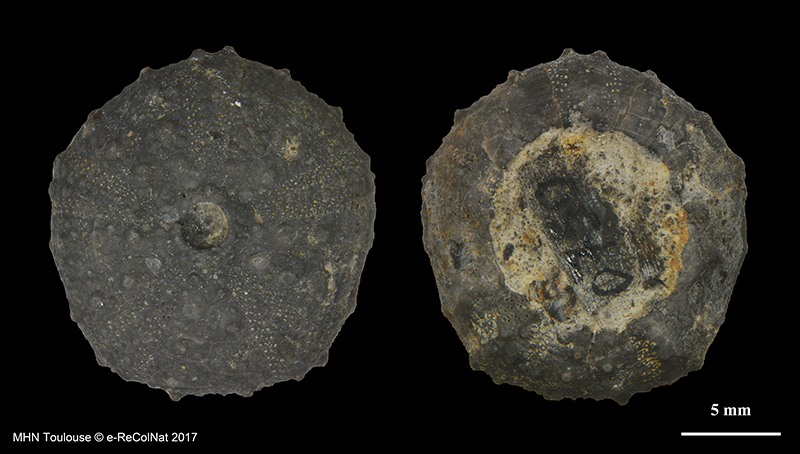
Promechinus
taferdoutensis Vadet,
Nicolleau & reboul,2010
- Bajocien,
Djebel Taferdout, Rich, Maroc, 24 mm |
|
|
|
|
|
|
|
|
|
|
|
|
|
|
|
Genre
Phymechinus
Desor, 1856
Synopsis des échinides
fossiles, p.133
Espèce type
Echinus mirabilis
Agassiz in
Ag. & Desor, 1846 (désignation
originale)
Extension
stratigraphique (bibliographique,
non vérifiée) : Bathonien -
Maastrichtien
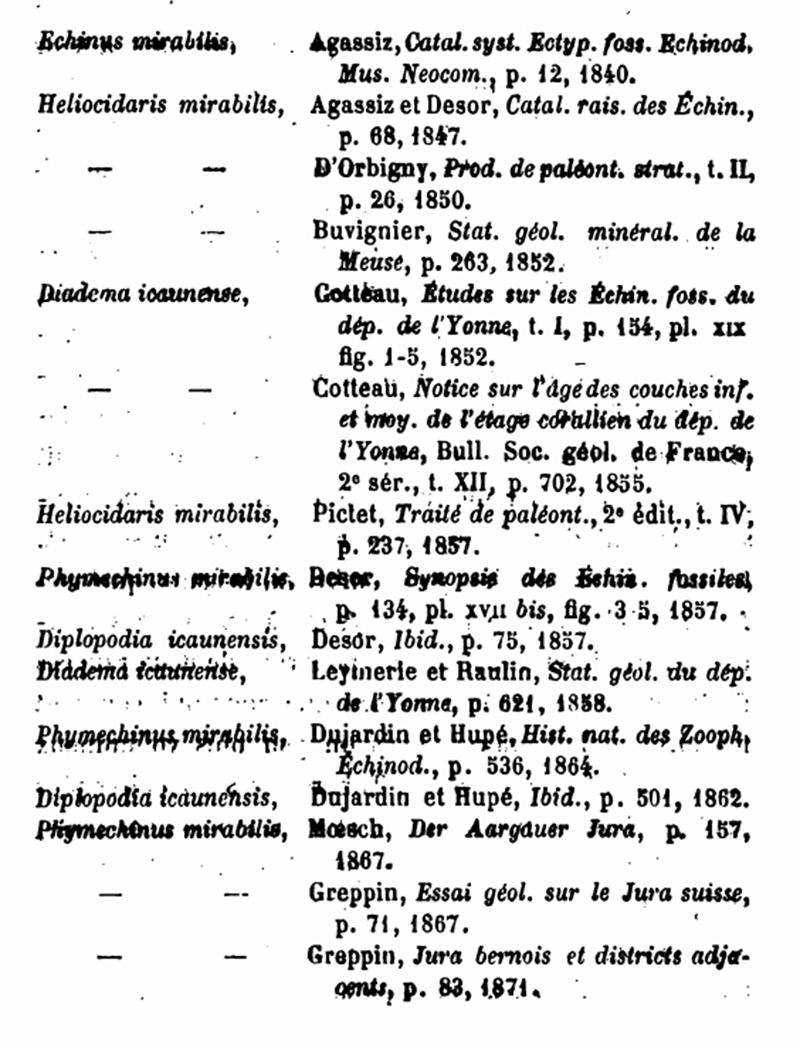
Syn.
|
|
|
|
|
|
|
|
|
| |
Phymechinus
jauberti (Cotteau,1863) |
|
|
|
|
|
diagnose originale de
l'espèce par Cotteau, 1863 |
|
Echinides nouveaux ou
mal connus, p.89 |
|
|
|
49. LEIOSOMA
Jauberti, Cotteau, 1863.
Haut., 8 mill.;
diam., 19 mill.
Espèce de
taille moyenne, sub-pentagonale, également déprimée en dessus et en
dessous. Zones porifères larges, composées de pores dédoublés à la
face supérieure et autour du péristome, simples seulement vers
l'ambitus. Aires ambulacraires très-étroites près du sommet,
s'élargissant au fur et à mesure qu'elles se rapprochent de la face
infé‑rieurs, garnies de deux rangées de tubercules non crénelés,
imperforés, fortement mamelonnés, saillants vers l'ambitus, diminuant
rapidement de volume près du sommet et du péristome, au nombre de
huit à neuf par série. Ces tubercules, assez serrés en dessous et vers
l'ambitus, s'espacent à la face supérieure et deviennent presque
alternes. Granules intermédiaires inégaux, peu abondants. Aires
interambulacraires pourvues de deux rangées de tubercules non crénelés
et imperforés comme ceux des ambulacres, mais un peu plus développés,
diminuant moins rapidement de volume à la face supérieure, an nombre
de dix par série. Tubercules secondaires presque nuls, formant, dans
la région infra-marginale, sur le bord des zones porifères, une rangée
inégale, irrégulière, se confondant vers l'ambitus avec les granules
qui les accompagnent. Zone miliaire assez large, presque nue aux
approches du sommet. Granules intermédiaires assez abondants, inégaux,
quelquefois mamelonnés, disposés en cercles incomplets autour des plus
gros tubercules. Péristome très-grand, s'ouvrant à fleur du test,
marqué d'entailles profondes et relevées sur les bords ; les lèvres
interambulacraires beaucoup moins larges que celles qui correspondent
aux ambulacres. Appareil apicial assez grand, subpentagonal d'après
son empreinte. Radioles inconnus.
Rapports
et différences. — Nous avons établi, en 1861, dans nos Échinides
de la Sarthe le genre Leiosoma pour recevoir une espèce de
l'étage sénonien, remarquable par sa forme déprimée, ses pores
ambulacraires fortement dédoublés, et qui, confondue jusque-là avec
les Cyphosoma, s'en éloignait par ses tubercules dépourvus de
crénelures et surmontés d'un mamelon relativement très-gros. L'espèce
que nous venons de décrire présente tous les caractères du genre, et,
bien qu'elle appartienne au terrain jurassique inférieur, nous n'avons
pas hésité à la réunir à notre genre Leiosoma. Elle diffère de
l'espèce crétacée (Leiosoma rugosum) par ses tubercules moins
gros et moins saillants surtout sur les aires ambulacraires, par son
appareil apicial plus petit et son péristome plus large. |
|
L'étage
bathonien de Perrogney ( Haute-Marne ) a fourni à M. Babeau une
troisième espèce de Leiosoma. Elle se sépare nettement du L.
Jauberti par sa taille plus forte et relativement plus comprimée,
ses tubercules interambulacraires plus petits, plus serrés, plus
nombreux et séparés par une zone miliaire plus large, son appareil
apicial plus étendu. C'est une espèce parfaitement tranchée, et dès à
présent nous la dédions, sous le nom de Leiosoma Babeaui, à M. Babeau
qui depuis longtemps s'occupe avec tant de succès de la recherche et
de l'étude des fossiles de la Haute-Marne. •
Le genre
Leiosoma, premier représentant des Diadématidées à tubercules non
crénelés et imperforés, compte aujourd'hui trois espèces, toutes fort
rares.
Les deux
premières caractérisent l'étage bathonien, et la troisième est propre
à l'étage sénonien.
Loc. —
Valauris (Var). Très-rare. Étage bathonien. Coll. Jaubert.
Expl. des
fig. — Pl. XII, fig. 7, Leiosoma Jauberti, vu de côté ; fig. 8,
face super.; fig. 9, partie super. de l'ambulacre grossi; fig. 10,
plaques interambulacraires grossies.
Planche XII (extrait)
|
|
|
|
|
syntype, conservé au
Musée National d'Histoire Naturelle de Paris |
|
figuré in
Cotteau, 1863,
Echinides
nouveaux ou peu connus, p.89 |
|
|
|
|
|
|
| |
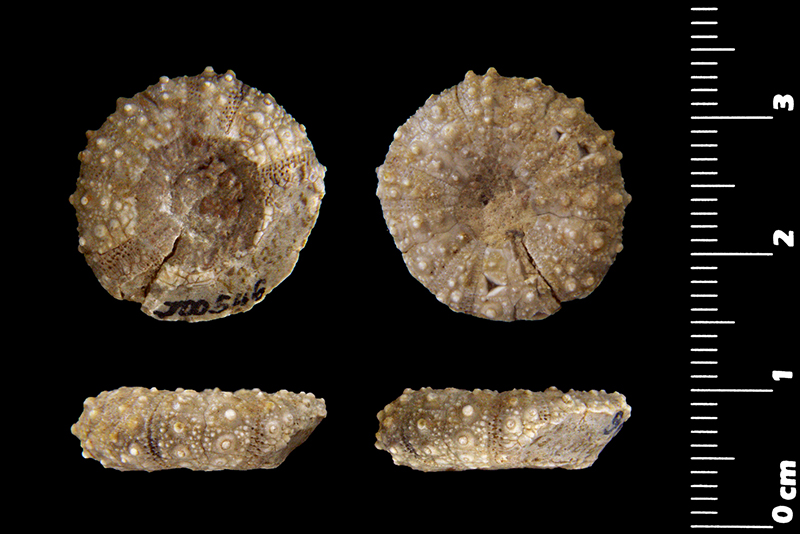
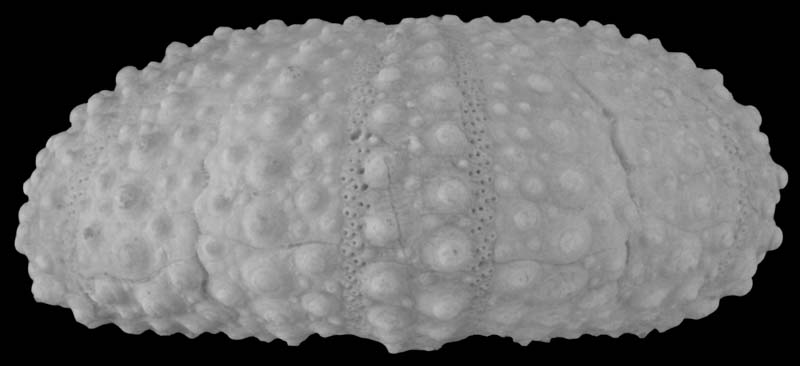
Phymechinus jauberti (Cotteau,1863)
- Bajocien,
Boulemane, Maroc,
36 mm |
|
|
|
|
|
|
|
|
| |
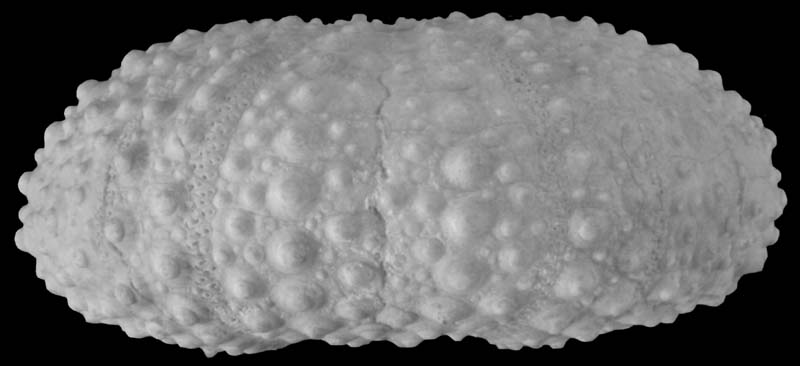
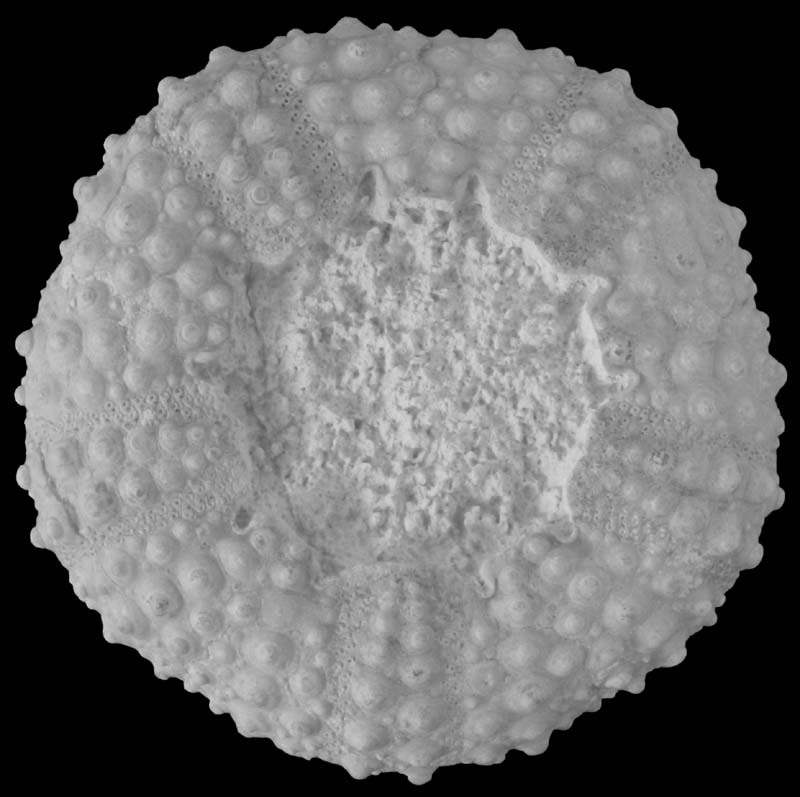
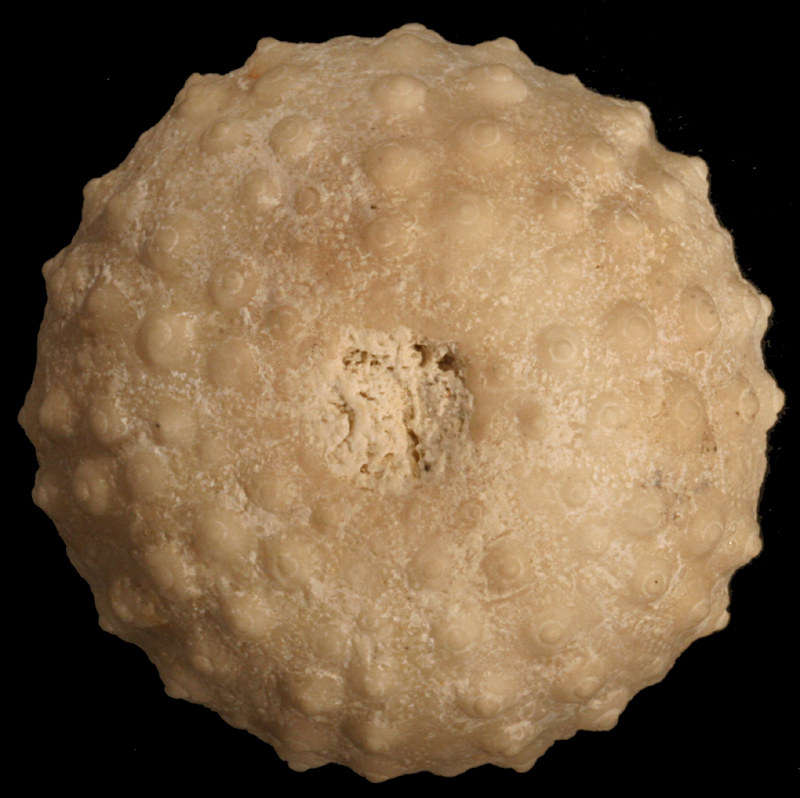
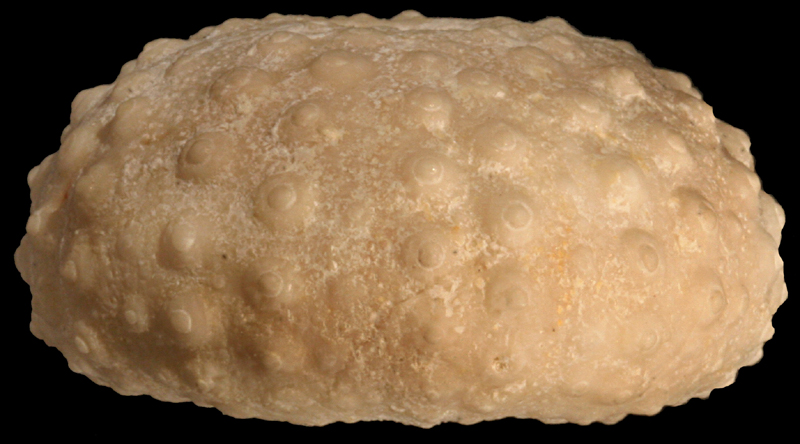
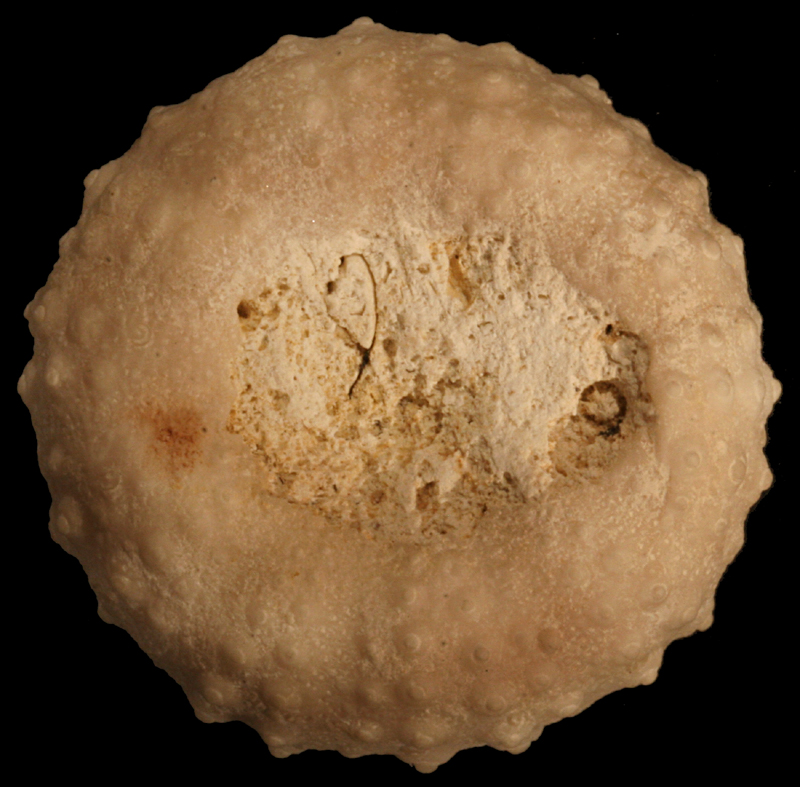
Phymechinus jauberti (Cotteau,1863)
- Bajocien,
Boulemane, Maroc,
39 mm |
|
|
|
|
|
|
|
|
|
|
|
|
| |
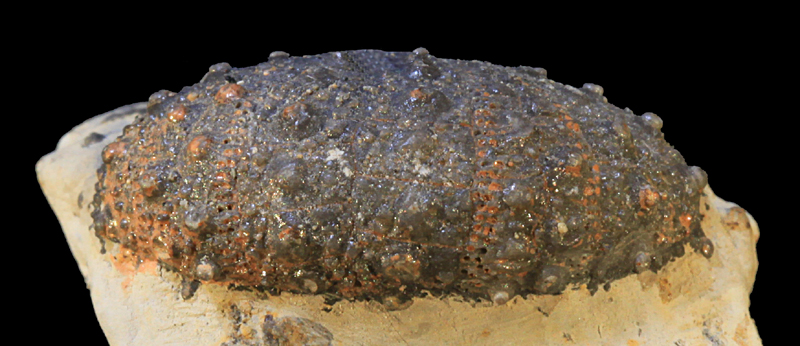
Phymechinus
mirabilis
(Agassiz in
Ag. & Desor, 1846) |
|
|
| |
|
diagnose originale de
l'espèce par Cotteau, 1884 |
|
Paléontologie française - Terrain Jurassique - Echinides réguliers,
t. 10, part. 2, p.787 |
| |
|
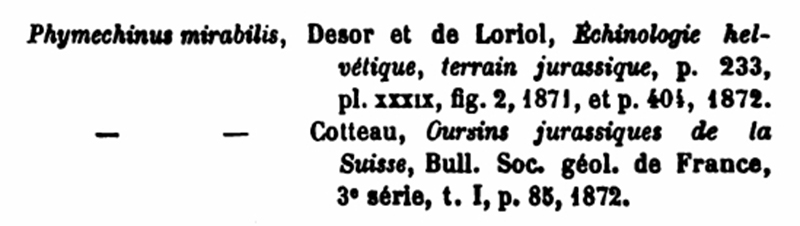
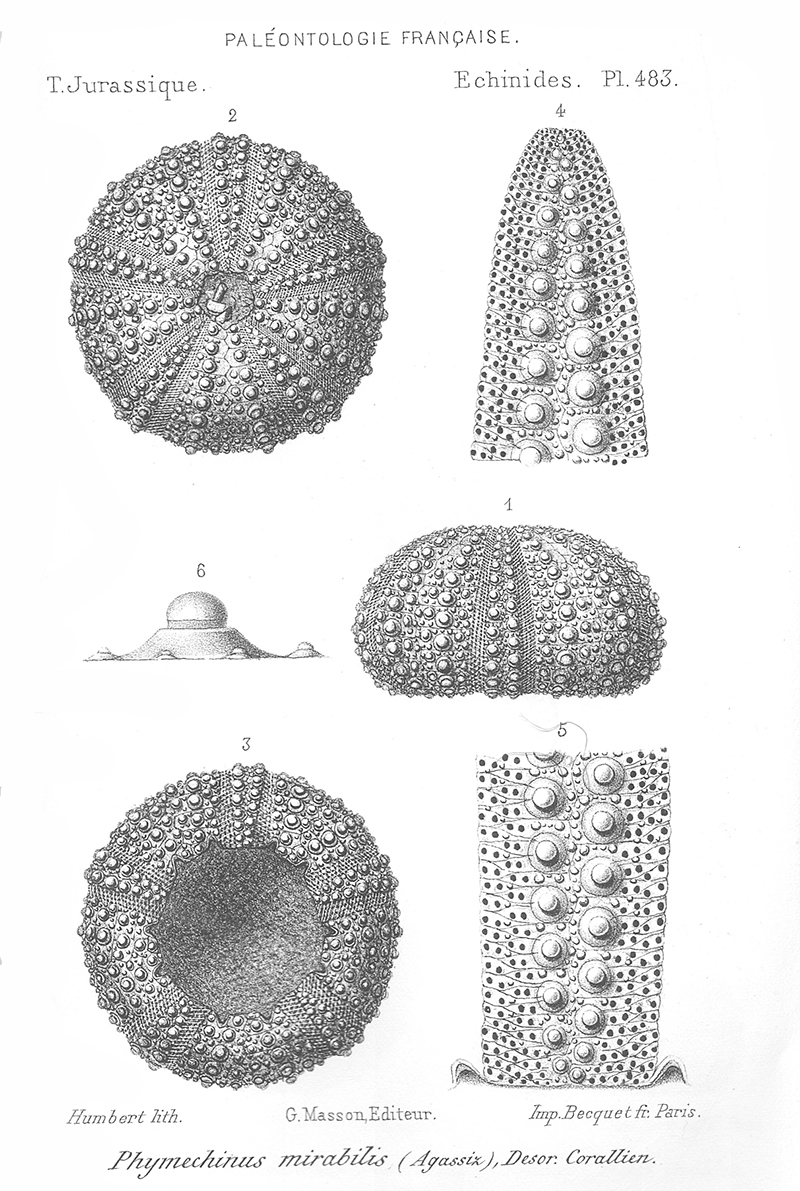
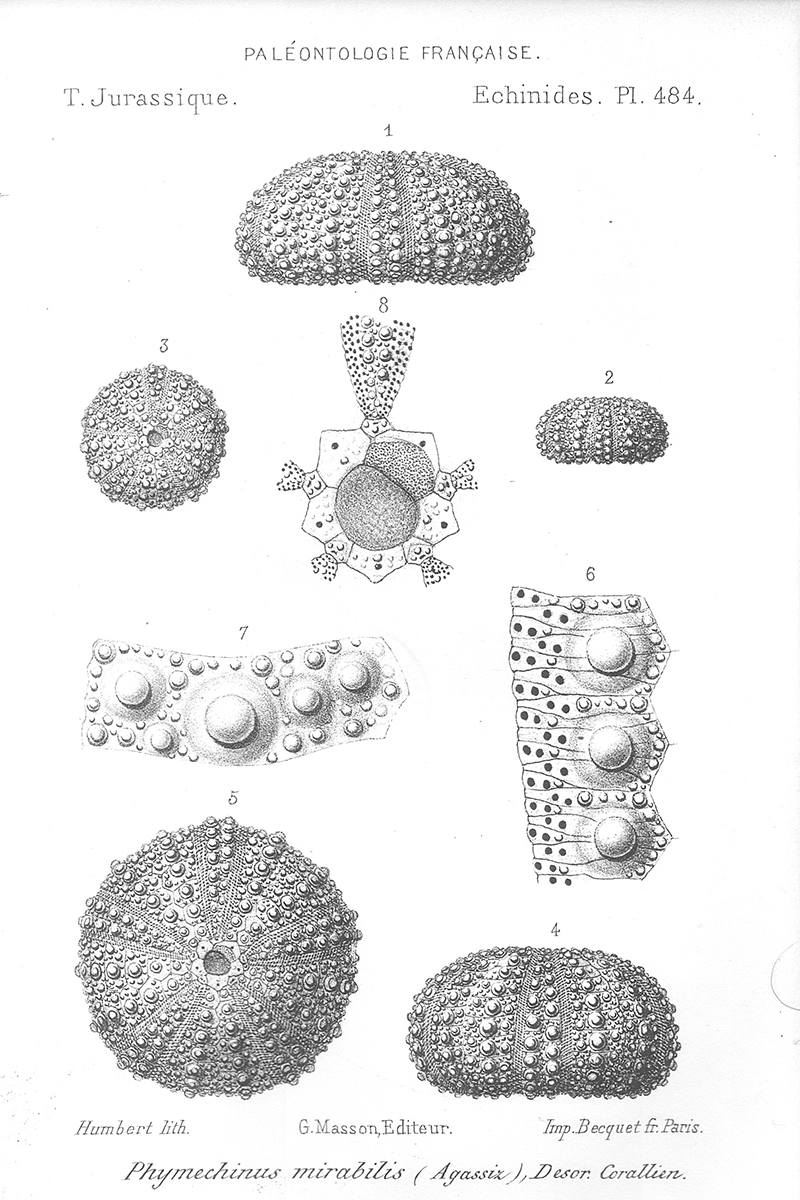
N° 494. - Phymechinus
mirabilis (Agassiz),
Desor, 1857.
Pl. 483 et 484.
X. 32.
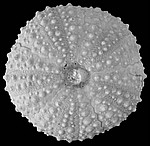
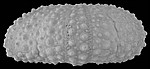
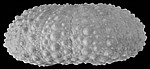
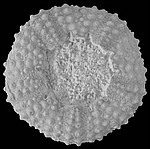
Espèce de grande taille, circulaire, haute et convexe en dessus,
arrondie sur les bords, presque plane en des-. sous. Zones porifères
droites, larges, granuleuses, à fleur de test, composées de pores
rangées par doubles paires formant deux séries assez régulières ; les
pores sont séparés par un léger renflement granuliforme et se
multiplient un peu autour du péristome ; chaque plaque ambulacraire
correspond à cinq ou six paires de pores. Aires ambulacraires
légèrement renflées, relativement étroites, garnies de deux rangées de
tubercules principaux saillants, espacés, non crénelés ni perforés,
fortement mamelonnés, visiblement sillonnés à la base par les sutures
des plaques porifères, au nombre de dix-sept ou dix-huit par série.
Ces tubercules assez homogènes diminuent insensiblement de volume, en
se rapprochant du sommet. Granules intermédiaires peu nombreux,
inégaux, quelquefois mamelonnés, se glissant çà et là entre les
scrobicules. Aires interambulacraires pourvues de deux rangées de
tubercules de môme nature que ceux qui couvrent les aires
ambulacraires, mais un peu plus volumineux surtout à la face
supérieure. Tubercules secondaires plus petits, fortement mamelonnés,
plus ou moins abondants, formant, au milieu des séries principales, et
de chaque côté, sur le bord des zones porifères, des rangées bien
apparentes à la face inférieure, mais plus irrégulières au-dessus de
l'ambitus, et disparaissant au fur et à mesure qu'elles s'élèvent.
Mêlés à ces tubercules secondaires, il s'en trouve d'autres beaucoup
plus petits, inégaux, épars, tendant à se confondre avec les granules
peu nombreux qui les accompagnent. Le milieu des aires
interambulacraires, aux approches du sommet, est plus ou moins nu et
déprimé. Péristome à fleur de test, largement ouvert, marqué
d'entailles profondes; les bords ambulacraires sont presque droits et
plus larges que les bords interambulacraires, sans que cependant la
différence soit aussi sensible que dans certaines espèces du genre &ornechinus.
Périprocte grand, subcirculaire. Appareil apical peu solide, presque
toujours disparu, pentagonal, à fleur de test ; plaques génitales
perforées assez loin du bord, la plaque madréporiforme un peu plus
développée que les autres; plaques ocellaires relativement très
étendues, les deux postérieures aboutissant directement sur le
périprocte.
Hauteur, 26 millimètres; diamètre, 50 millimètres. Individu très
déprimé : hauteur, 15 millimètres; diamètre, 45 millimètre.
Individu à tubercules très développés : hauteur, 21 millimètres;
diamètre, 42 millimètres.
Cette espèce présente quelques variétés qu'il importe de signaler : la
forme générale renflée, convexe chez plusieurs exemplaires, est chez
d'autres fortement déprimée; l'ambitus, presque toujours
régulièrement circulaire, affecte, chez certains individus, un aspect
pentagonal bien accusé. Les tubercules sont variables dans leur nombre
et leur grosseur; le plus souvent les deux rangées interambulacraires
principales se détachent nettement à la face supérieure, comme dans
le moule en plâtre du type X. 33, et les tubercules secondaires ne
sont nombieet et apparents qu'à la Net idfériebre et vars l'ambitus.
Quelquefois ces tubercules secondaires remontent bien plus haut et
donnent au test un aspect beaucoup plus tuberculeux; les tubereuleS
principaux sont plus ou moins serrés ; plus ou moins
scrobiculés. |
|
Rapports et différences.
— Cette espèce; telle qu'elle est circonscrite, sera toujours
facilement reconnaissable à sa forme circulaire, renflée en dessus,
presque plane en dessous; à ses pores higéminés, à ses tubercules
ambulaéraires et intef'ambulaoraires bien développés et accompagnés
de-nombreux tubercules secondaires, à edn péristorne à fleur de test
et largement ouvert.
Histoire. - Placée
successivement dans les genres Echinus et Heliocidaris,
cette espèce a servi de type, au genre Phymechinus, Desor, que
tous les auteurs ont adopté: Naos lui rapportons sans hésitation notre
Diadema icaucense. Trompé par l'usure du test, nous avions considéré
comme étant trénelés et perforés ses tubercules; qui en réalité sont
dépourvus de crénelures et de perforation et placent l'espèce dans le
genre Phymeehinsul La dépression très accusée du test ne suffit pas
pour en faire fine espèce particulière. .
Localités. — Merry-sur-Yonne,
Coulanges-sur-Yonne, Crain (Yonne); Chaume, Sélongey (Côte-d'Or);
enviroes de Clamecy (Nièvre) ; Puiseux, Méziàres, Viel-Saint,Remy,
Saulces-aux-Bois (Ardennes); les Adrets près Saint-Claude (Jura).
Assez rare. Étage corallien.
Étole des Mines de Paris, Musée de Genève (coll. Martin); collection
Paon, Choffat; ma collection.
Localités autres que le France.
-.7 Dévelier-Dessus (Jura bernois); Sainte-Croix (canton de Vaud).
Terrain à chailles.
Explication des figures.
— PI. 483, fig. 1, P. mirabilis, de Viel-Saint-Remy (Ardennes),
de la collection de l'École des Mines, vu de côté; fig. 2, face
supérieure; fig. 3, face inférieure ; fig. 4, partie supérieure de
l'aire ambulacraire grossie; figé 5, partie inférieure de l'aire
ambulacraire grossie; fig. 6, tubercule interambulacraire, vu de
profil, grossi. — Pl, 484, fig. 1, P. mirabilis, variété
déprimée de Clamecy, de la coll. de l'École des Mines, vu de côté;
fig. 2, individu jeune, de Saulces-auxBois, de la coll. de l'École
des Mines, vu de côté; fig. 3, face supérieure ; fig. 4, autre
individu, variété à gros tubercules, de Puiseux, de la collection de
M. Peron, vu de côté; 11g. 5, face supérieure ; fig. 8, portion de
l'aire ambulacraire grossie; fig. 7, plaque interambulacraire grossie
; fig. 8, appareil apical grossi.
Planches 483-484 (extrait)
|
|
| |
|
figuré, conservé
au Musée National d'Histoire Naturelle de Paris
|
|
figuré in
Cotteau, 1884,
Paléontologie française - Terrain Jurassique - Echinides réguliers,
t. 10, part. 2, p.787 |
| |
|
|
| |
| |
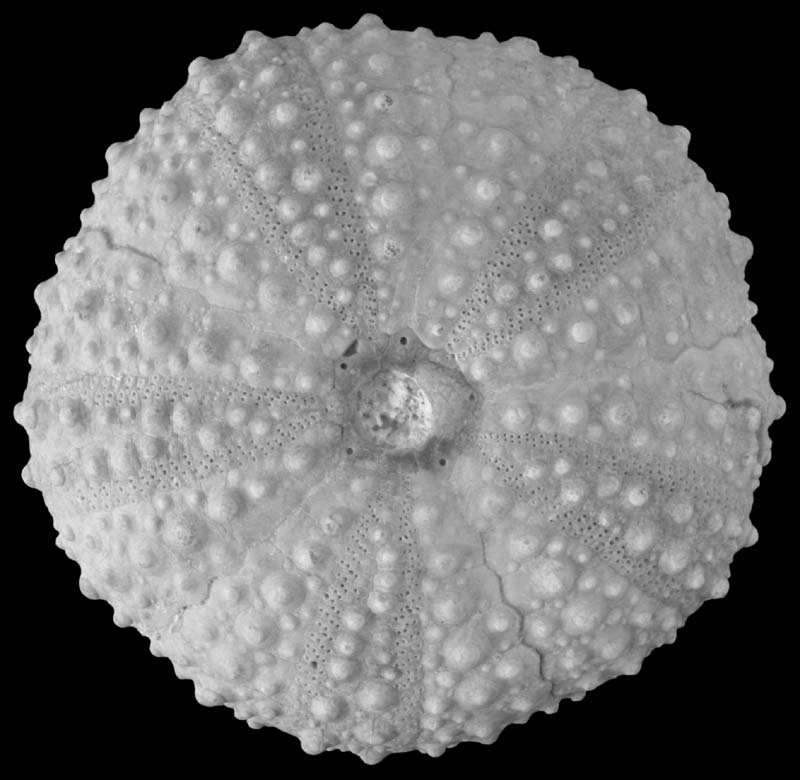
Phymechinus
mirabilis
(Agassiz in
Ag. & Desor, 1846) -
Oxfordien, Ardennes (08), 44 mm |
|
|
|
|
 |
 |
 |
 |
|
|
|
|
|
|
|
Genre
Phymotaxis
Lambert & Thiery, 1914
Essai de nomenclature
raisonnée des échinides, p. 253
Espèce type
Leiosoma tournoueri
Cotteau
, 1866 (désignation
subséquente de Lambert & Thiery)
Extension
stratigraphique (bibliographique,
non vérifiée) : Crétacé
Syn.
|
|
|
|
|
diagnose originale du genre par Lambert & Thiery |
|
Essai de nomenclature raisonnée des échinides, p. 253 |
|
|
Genre :
PHYMOTAXIS Lambert et Thiéry
Test de taille moyenne, circulaire, à péristome médiocre. Apex étroit,
subcirculaire, caduc. Ambulacres composés de majeures 7-8 sociées ;
zones porifères bigéminées du péristome à l'ambitus, unigéminées en
dessus. Tubercules subégaux, plus développés à la face supérieure, en
deux rangées dans chaque aire, accompagnés ou non de secondaires
limités à l'ambitus.
Type : P. Tournoueri
Cotteau (Leiosoma), 284, p. 768 ; Pl. 1187, du Sénonien.
Synonymie :
MICROPELTIS Pomel, 1112,
p. 89 ; 1883 (non Redtenbacher ; 1867, nec Kraatz ;
1880). |
|
|
|
|
|
| |
Phymotaxis
mansfieldi Cooke,1941 |
|
|
|
|
description de l'espèce par Cooke, 1959 |
|
Cenozoic echinoids of Eastern United States, p. 24 |
|
|
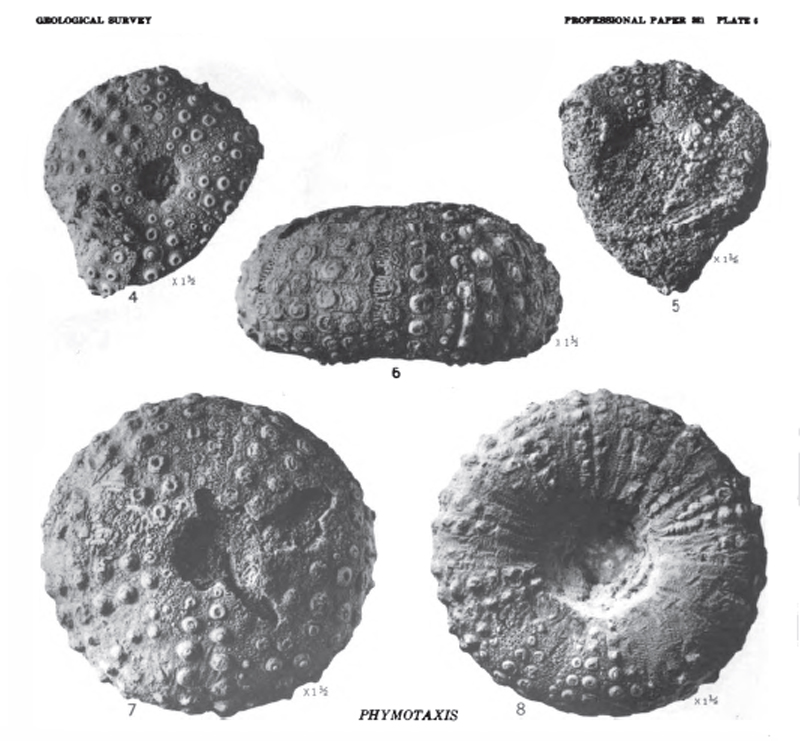
Phymotaxis
mansfieldi Cooke
Plate 6,
figures 4-8
Phymotaxis
mansfieldi Cooke, 1941, Journ. Paleaontology, v. 15 no. 1, p. 18,
pl. 4, figs. 6-8.
Test large, subhemispherical, with evenly rounded margin, slightly
concave near the peristome. Apical system unknown. Ambulacra about
half as wide as the interambulacra ; poriferous zones forming single
arcs of about eight zygorpores above the ambuitus, zygopores
irregularly distributed in a broader zone below the ambitus. Tubercles
large, imperforate, two rows on each ambulacrum, four rows on each
interamb ulacrum at the ambitus, the lateral rows not extending to the
apex ; each primary tubercle surrounded by a row of little tubercles
that generally follow the edges of the plate, one little tubercle at
each angle of the plate being somewhat larger than the others.
Peristome rather small, subdecagonal ; gill slits moderately deep,
callous.
Horizontal diameter of largest cotype 56 mm. ; height 27 mm. ; diamter
of peristome 20 mm.
Occurence.
- Florida : Old quarry of Florida Rock Products Company 3/4 mile
southwest of Brooksville (USGS 12755, W. C. Mansfield and G. M.
Ponton). Consolidated Rock Products Company 3 miles northeast of
Brooksville (USGS 12321, W. D. Mansfield and F. S. MacNeil). |
|
Geologic unit. - Late Oligocene, Suwannee limestone.
Types. - USNM 372868, two nearly complete individuals and one
smaller fragment.
Comparison. - No other American species of Phymotaxis
are known. Phymotaxis mansfieldi differs from P. tournouri
of Cretaceous age as figured by Cotteau in the less plainly biserial
arrangement of the zygopores on the under surface and in the more
conspicuous arcuate arrangement on the upper surface. In theses
respects it is more nearly similar to P. biarritzensis of
Eocene age (Cotteau, 1892, pl. 322, figs. 5-7) and P. vidali (Cotteau,
1892, pl. 322, fig. 8 ; pl. 323), but its gill slits are deeper and
sharper.
Planche 6 (extrait)
|
|
|
| |
Phymotaxis
mansfieldi Cooke, 1941
- Pliocène
inférieur, Redonien, Vendée, 10 mm |
|
|
|
|
|
| |
|
|
| |
| |
Phymotaxis tournoueri
(Cotteau,1866) |
|
|
| |
|
diagnose originale de
l'espèce par Cotteau, 1866 |
|
Paléontologie
française, terrains crétacés, tome VII, échinides réguliers, p.768 |
| |
|
N° 2587.
Leiosoma Tournoueri, Cotteau, 1866.
Pl. 1187.
Espèce de grande taille, circulaire, renflée et sub-hémisphérique en
dessus, presque plane en dessous. Zones porifères très-onduleuses
surtout aux approches du sommet, composées de pores simples, arrondis,
serrés, séparés par un petit renflement granuliforme, se multipliant
autour du péristome. Aires ambulacraires aigues et étroites près de
l'appareil apicial, s'élargissant au fur et à mesure qu'elles
descendent vers la région infra-marginale, garnies de deux rangées de
tubercules de grosse taille, saillants, fortement mamelonnés, assez
espacés, diminuant rapidement de volume près du sommet et de la
bouche, au nombre de onze à dix par série. Les tubercules qui
avoisinent le sommet sont plus espacés que les autres, alternes, et
paraissent pour ainsi dire disposés sur une même ligne. Granules
intermédiaires peu abondants, inégaux, quelquefois mamelonnés,
relégués çà et là entre les scrobicules qui souvent se touchent par la
base. Aires interambulacraires relativement étroites, pourvues de deux
séries de tubercules principaux à peu près de même taille, vers
l'ambitus et dans la région infra-marginale, que ceux qui couvrent
l'ambulacre, mais beaucoup plus gros à la face supérieure, et qui
présentent ce singulier caractère d'être aussi volumineux aux
approches de l'appareil apicial que vers l'ambitus, au nombre de onze
à douze par série. Tubercules secondaires presque aussi développés que
les tubercules principaux, formant, de chaque côté des
interambulacres, une rangée très-régulière, apparente surtout à la
face inférieure et vers le pourtour du test, et qui au-dessus de
l'ambitus est remplacée par des granules inégaux, disparaissant
eux-mêmes complètement avant d'arriver au sommet. Zone miliaire nulle
; les deux rangées de tubercules principaux, très-rapprochées l'une de
l'autre, laissent à peine la place à quelques granules épars, inégaux,
quelquefois mamelonnés, intercalés çà et là à l'angle des scrobicules;
et forment, vers l'ambitus, une simple rangée sub-sinueuse. Péristome
médiocrement développé, s'ouvrant à fleur du test, muni d'entailles
apparentes; les lèvres ambulacraires sont presque droites et beaucoup
plus larges que celles qui correspondent Sua aires interambulacraires.
Appareil apicial très-étroit, sub-circulaire, onduleux sur les bords.
Hauteur, 20 millimètres ; diamètre, 41 millimètres.
Nous avons rapporté à cette espèce un exemplaire que possède le Musée
de Marseille, et qui provient de la région pyrénéenne, sans indication
précise de localité. Sa taille est un peu plus petite, et cette
différence d'âge parait entraîner quelques modifications qu'il importe
de mentionner : les zones porifères sont |
|
beaucoup
moins ondulées à la partie supérieure et composées de pores plus
directement superposés ; les tubercules interambulacraires sont plus
serrés et relativement moins volumineux près du sommet. L'appareil
apicial, tout en conservant un aspect onduleux sur les bords est plus
allongé, plus étendu et affecte une forme sub-pentagonale plus
prononcée. Malgré ces dissemblances assez tranchées, nous n'avons pas
cru devoir séparer cet exemplaire du type que nous venons de décrire.
Rapports et différences.
- Cette espèce ne saurait être confondue avec aucune autre. Sa grande
taille, sa forme sub-hémispbérique, ses zones porifères onduleuses, la
disposition de ses tubercules principaux et secondaires et
l'étroitesse de l'appareil apicial en font un type particulier qui
sera toujours facilement reconnaissable. Au premier aspect le L.
Tournoueri offre quelque ressemblance avec le Cyphosoma
major de la craie turonienne d'Algérie; il en diffère cependant d'une
manière positive par ses pores simples et onduleux près du sommet, par
sa zone miliaire nulle et surtout par ses tubercules dépourvus de
crénelures, caractère qui place cette espèce parmi les Leiosoma
.
Localité. — Roquefort
(Landes). Très-rare. Étage sénonien. Nous nous faisons un plaisir de
dédier cette belle espèce à M. Tournouer qui a bien voulu enrichir
notre collection de l'échantillon unique qu'il possédait.
Musée de Marseille, ma collection.
Explication des figures.
— Pl. 1187, fig. 1, L. Tournoueri, de ma collection, vu de côté
; fig. 2, face sup. ; fig. 3, face inf.; fig. 4, po- rtion de la face
sup. grossie; fig. 5, plaques interambul. grossies; fig. 6, tubercule
interambul., vu de profil, grossi ; fig. 7, autre exemplaire, du Musée
de Marseille, vu de côté; fig. 8, face sup.
Planche 1187 (extrait)
|
|
| |
|
syntype, conservé
à Université Claude Bernard Lyon I |
|
figuré in
cOTTEAU, 1866,
Paléontologie française. Terrain crétacé, VII, échinides réguliers,
p.768 |
| |
|
|
| |
| |
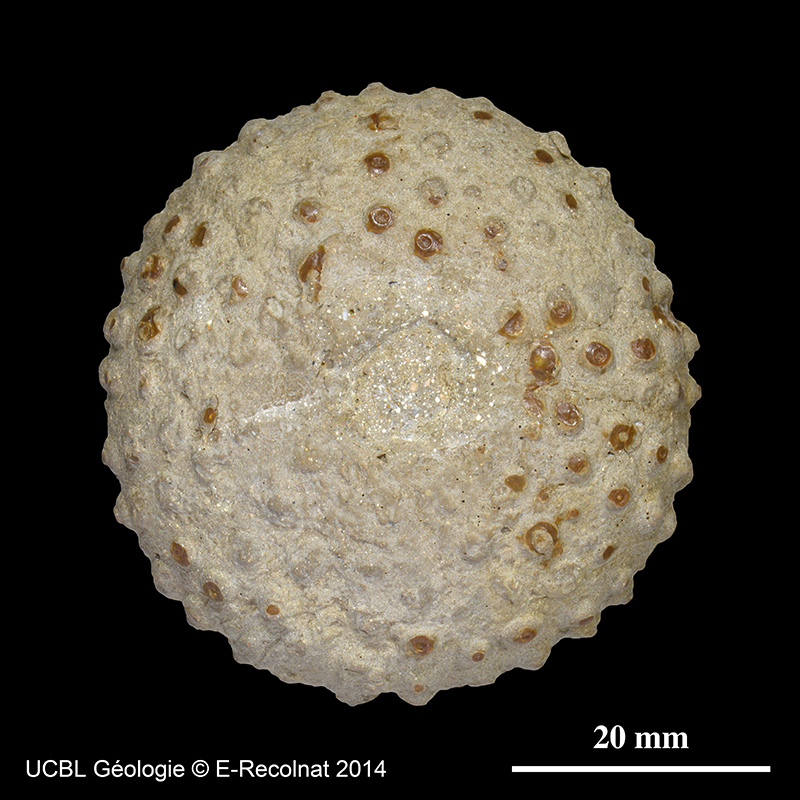
Phymotaxis tournoueri (Cotteau,1866)
- Maastrichtien,
Peedee formaiton, Rocky Point, Caroline du Nord, U.S.A., 41 mm |
|
|
| |
|
|
| |
|
|
|
|
|
Genre
Stomopneustes
Agassiz,1841
On the progress
receently made in the natural history of echinodermata, p.5
Espèce type
Echinus variolaris
Lamarck,1816
par monotypie
Extension
stratigraphique (bibliographique,
non vérifiée) : Oligocène -
Actuel |
|
|
|
|
diagnose originale du genre par Agassiz,1841 |
|
On
the progress receently made in the natural history of echinodermata, p.5 |
|
|
In a
monograph which it is my intention shortly to publish upon the living
species of the genus Echinus (Auct. Antiq.) I have established
the following divisions, of which I here only indicate the typical
species : Temnopleurus (Ech. toreumaticus), Pleurochinus
(e. bothyroides), Microcyphus (E. versicolor), Tripneustes
(E. ventricosus), Amblypneustes (E. griseus), Toxopneustes
(E. pileolus), Stomopneustes (E. variolaris). |
|
|
|
|
|
| |
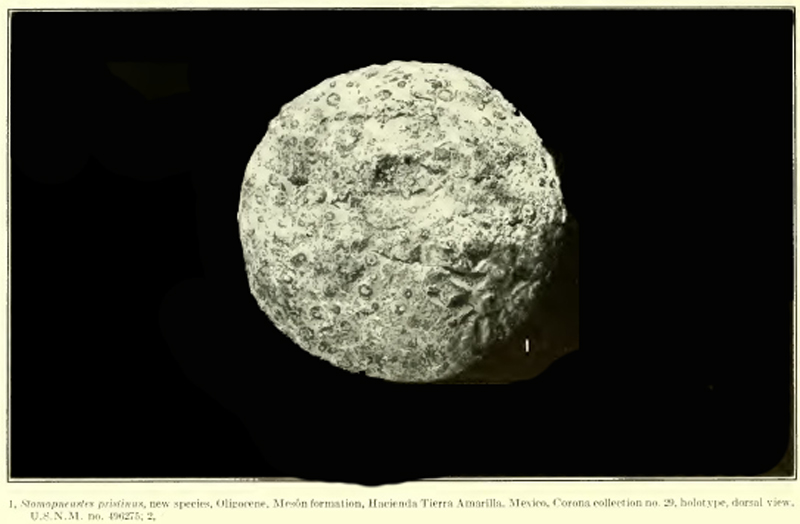
Stomopneustes pristinus
Jackson,1937 |
|
|
|
|
diagnose originale de l'espèce par Jackson,1937 |
|
Mexican fossil echini, p.3 |
|
|
STOMOPNEUSTES
PRISTINUS, new species
Plate 12,
Figure 1
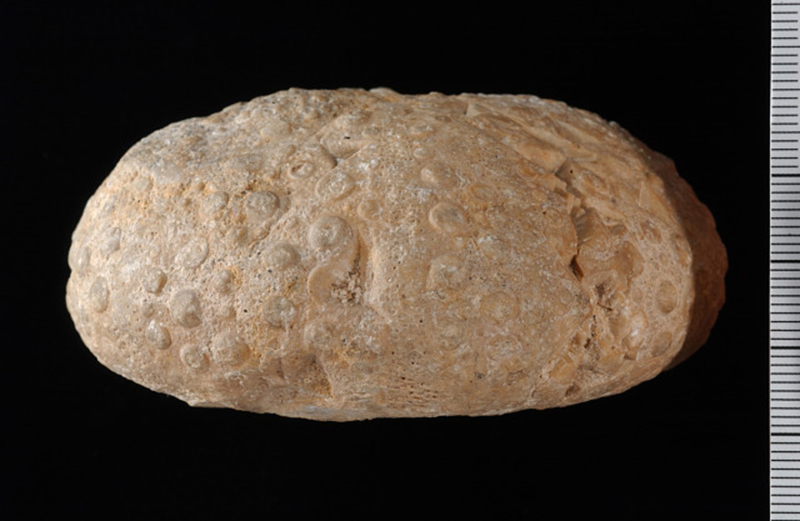
Test low, dome-shaped, ambitus below the midzone, slightly pentagonal
in horizontal outline, the ambulacral areas coinciding with the apices
of the pentagon, flattened dorsally, slightly reentrant about the
peristome, otherwise very nearly flat ventrally. Ambulacra wide,
measuring about 25 mm in width at the ambitus, ambulacral plates
composed of three elements, but tliis species, like the Recent S.
variolaris (Lamarck), has a peculiar arrangement in that every
fourth ambulacral plate bears a large primary tubercle that has grown
over four plates and hides their sutures. This, with other important
details in regard to the Recent species, is considered by Dr. H. L.
Clark. Interambulacra with two vertical rows of primary tubercles in
each half-area. Diameter of the specimen 81 mm, height 38 mm.
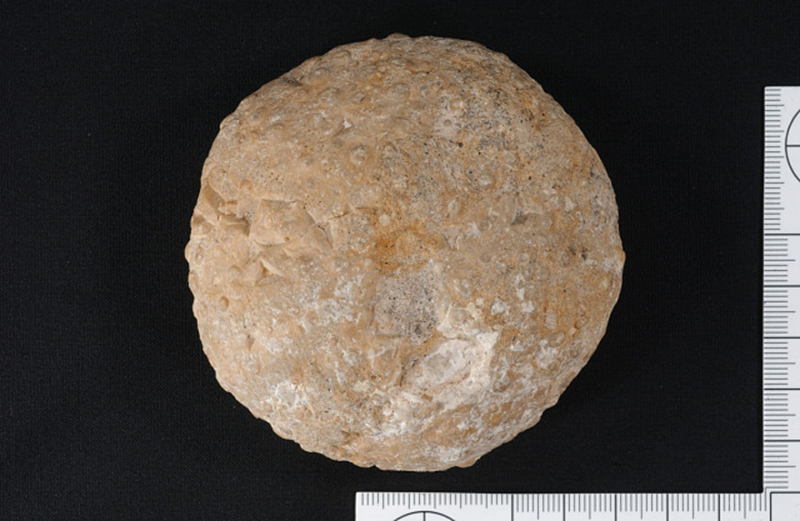
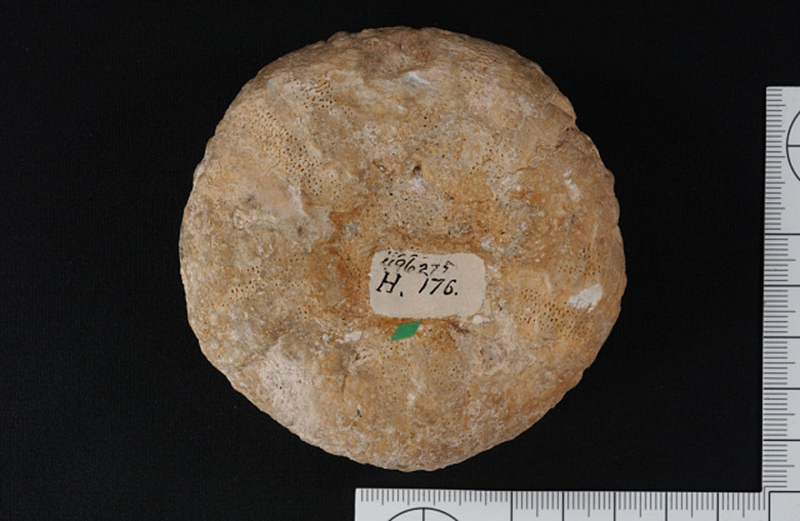
The single known specimen (U.S.N.M. no. 496275) of this new and
interesting ecliinoid is much worn and shows structural detail only in
parts of the test. The peristome and periproct are not preserved, or
are not visible. The test is thick and solid and gives no evidence of
flattening or other distortion. |
|
The genus Stomopneustes is known from the Recent species S.
variolaris (Lamarck) from the southern Pacific Ocean. According to
Duncan, a species has been found in the Tertiary of Java, but he
queried the statement.
Oligocene, Meson, Hacienda Tierra Amarilla, about 7 km northwest of
the town of Temapache, Canton Tuxpan, Veracruz, Mexico; Corona
collection, no. 29 ( = H176), one specimen.
Planche 12 (extrait)
|
|
|
|
Holotype, conservé
au Smithsonian National Museum of Natural History |
|
figuré in
Jackson 1937, Mexican fossil echini, p.3 |
|
| Catalog Number: |
USNM MO 496275 |
| Collection Name: |
Echinodermata Echinoidea Type |
| Scientific Name (As Filed): |
Stomopneustes pristinus Jackson |
| Type Status: |
Holotype |
| EZID: |
http://n2t.net/ark:/65665/38b8681ac-237d-4173-99de-2518f7162ba8 |
|
|
|
 |
|
|
|
|
|
| |
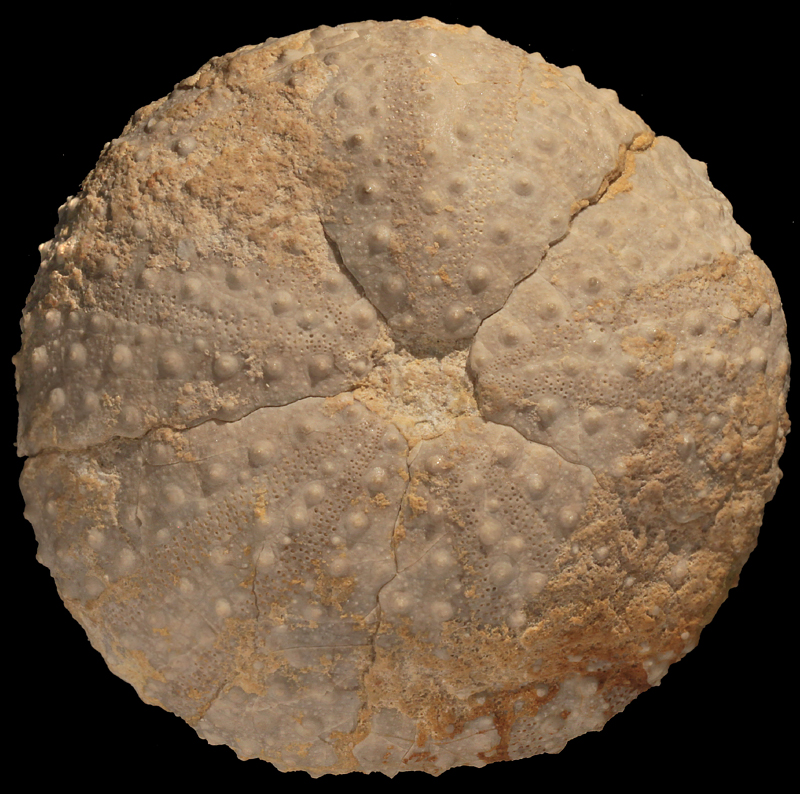
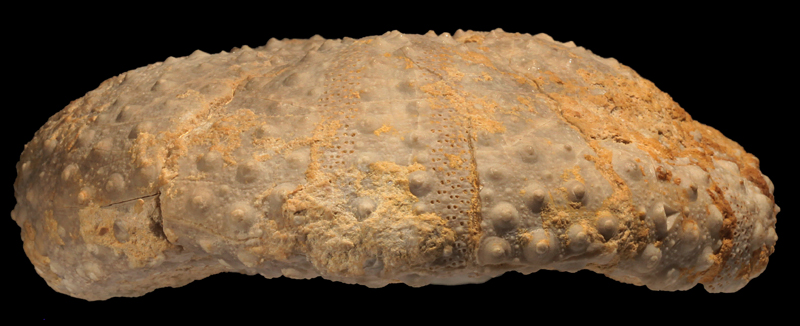
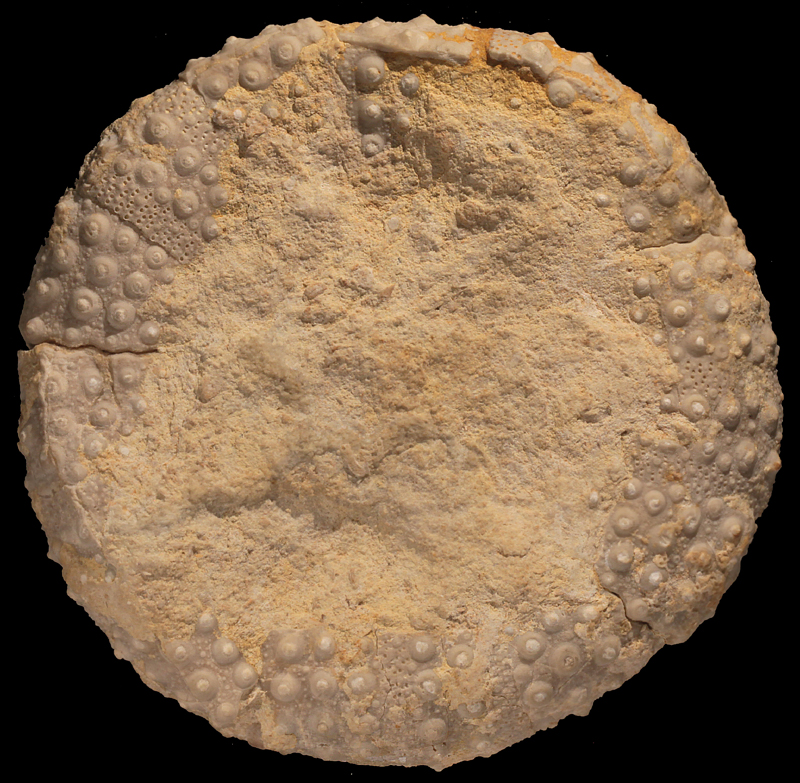
Stomopneustes
pristinus
Jackson,1937
- Oligocène
supérieur, Palenque, Chiapas, Mexique, 99 mm |
|
|
|
|
|
|
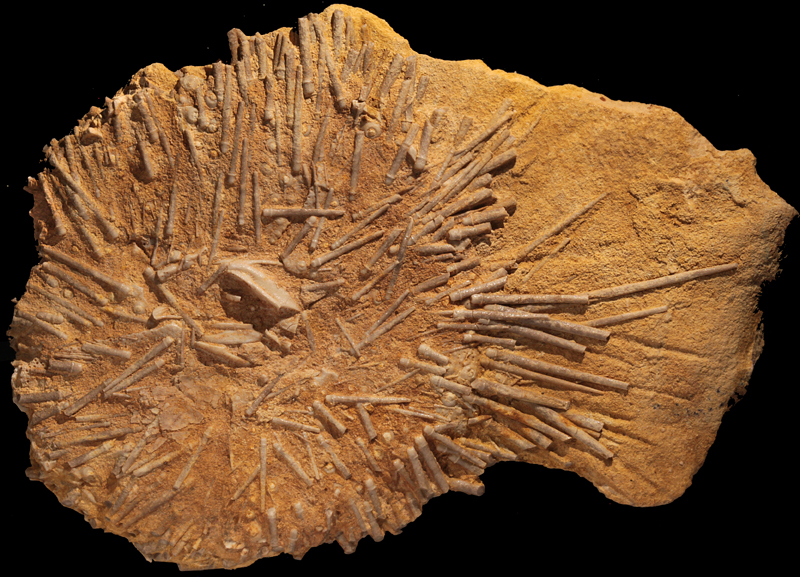
| |
Stomopneustes
pristinus
Jackson,1937
- Oligocène
supérieur, Palenque, Chiapas, Mexique, plaque = 162 mm |
|
|
|
|
|
|
|
|
|
|
|


%20planche%20XII.JPG)
,%20ambital,%20Bajocien,%20Boulemane,%20Maroc,%2036%20mm.jpg)
,%20oral,%20Bajocien,%20Boulemane,%20Maroc,%2036%20mm.JPG)
,%20apical,%20Bajocien,%20Boulemane,%20Maroc,%2039%20mm.jpg)
,%20amb,%20Bajocien,%20Boulemane,%20Maroc,%2039%20mm.JPG)
,%20interamb,%20Bajocien,%20Boulemane,%20Maroc,%2039%20mm.JPG)
,%20oral,%20Bajocien,%20Boulemane,%20Maroc,%2039%20mm.JPG)


,%20planche%201187.jpg)
,%20large,%20Rocky%20Point,%20Caroline%20du%20Nord,%20USA,%20Maastrichtien,%20Peedee%20formation,%2041%20mm.jpg)
,%20detail,%20Rocky%20Point,%20Caroline%20du%20Nord,%20USA,%20Maastrichtien,%20Peedee%20formation,%2041%20mm.JPG)
,%20detradioles,%20Rocky%20Point,%20Caroline%20du%20Nord,%20USA,%20Maastrichtien,%20Peedee%20formation,%2041%20mm.jpg)